Bread
Roosterkoek
Yeast dough rolls baked not in an oven but straight on the grid over the last of the coals. Crusty outside, soft inside, and at a push the only side dish you need.
The name says exactly what it is — rooster is the grid, koek the cake. Roosterkoek is the dry cousin of the deep-fried vetkoek and one of the few breads in the world that needs neither oven nor tin.
- Prep
- 25 min
- On the fire
- 18 min
- Serves
- 12
- Effort
- medium
How hot
Gentle
You can hold your hand over the grid for 8 seconds · ≈ 150–175 °C
Every coal stage explained →When it goes on
Once the meat is off
The coals are dropping off. Now bread and braaibroodjies go on.
Equipment: Grid
This line
The three-legged pot, sausage as a way of keeping meat, bread without an oven.
Method
-
Mix the dough
Combine flour, yeast, salt and sugar in a bowl, keeping the salt and yeast from landing directly on each other. Add oil and water and bring it together into a dough.
-
Knead
Knead for eight to ten minutes until smooth and no longer sticking to your hands. It should stay firm — noticeably firmer than a pizza dough.
-
First rise
Cover and leave somewhere warm for about an hour, until doubled in volume. That is the hour in which you light the fire.
-
Divide
Knock the dough back and divide it into twelve equal pieces. Shape each into a flat disc about 2 cm thick — not balls, or the middle stays raw.
-
Second rise
Lay the discs on a floured tray, cover loosely and leave for 15 minutes. Dust both sides with flour before they go on.
-
Prepare the grid
Oil the grid lightly and spread the coals evenly. Eight to ten seconds on the hand test — the heat left after the meat has come off. Over hotter coals the crust burns before the middle cooks.
-
Bake
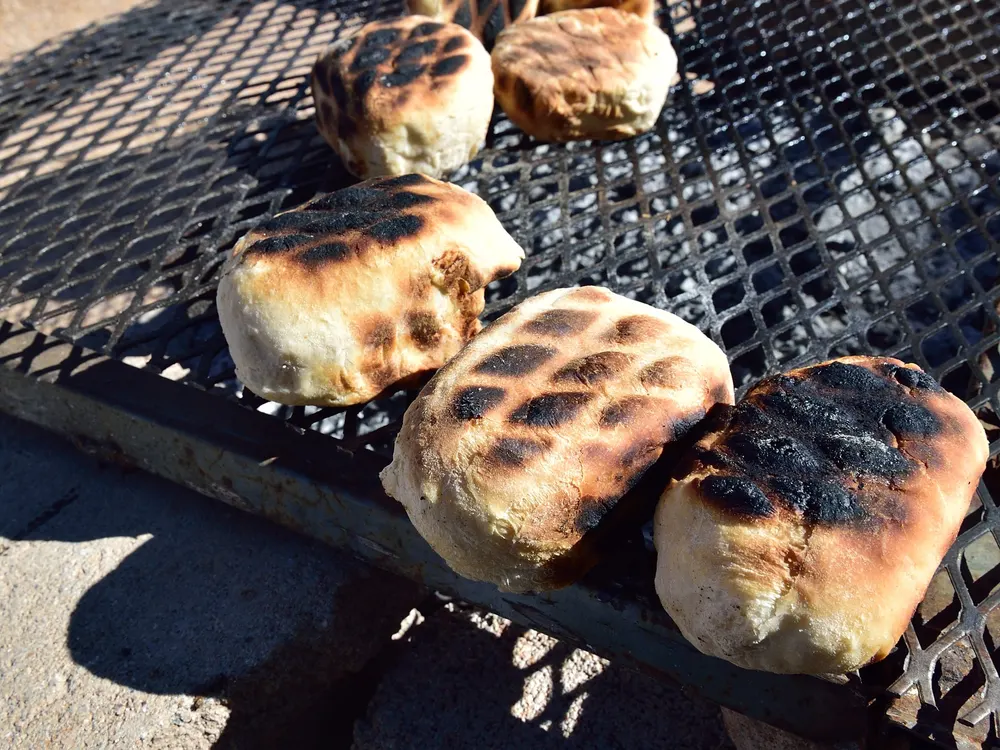
Lay the discs on and bake for 15 to 20 minutes, turning two or three times. They are done when they carry brown spots and sound hollow when tapped.
-
Tear, do not cut
Tear them open hot with your hands and put butter inside. Cutting them presses them flat.
Tips
- The water quantity is the only critical point, and the sources disagree — Jan Braai works considerably wetter than Cooksister. Start at 320 ml. Dough that is too soft runs between the bars before it bakes.
- No yeast in the house? A baking-powder version works, but it tastes flatter and dries out faster.
- Split and filled with chakalaka or monkey gland sauce, roosterkoek is a meal in its own right.
- Toast leftovers the next morning. Fresh is better, but not so much better that you throw any away.
Roosterkoek is proof that nothing at a fire has to go to waste. Once the meat is off the grid there is still half an hour of usable heat sitting there — exactly the heat bread wants and nothing else does.
The dough is an ordinary lean yeast dough, but the consistency is not. It has to be firm enough to sit on bars without sagging. That is the one place roosterkoek goes wrong, which is why the water here is measured on the mean side.
They are eaten hot, with butter that melts before it arrives. In plenty of families they are the reason the fire does not get put out the moment the last tjop is gone.
Where it comes from
- Where the word comes from
- Afrikaans · Literally „grid cake“ *Rooster* is the grid, *koek* is the cake — the name says exactly what happens.
Roosterkoek is one of the few breads in the world that needs neither an oven nor a pot: dough, grid, coals. The name says exactly that. It grew out of the same necessity as potbrood — a household on the move, or without an oven, still needed bread.
It is related to vetkoek, the deep-fried dough ball; the ingredient list is nearly identical. The difference is the heat source: vetkoek goes into hot fat, roosterkoek onto the grid. Everything else follows from that — roosterkoek is drier, has a firm crust and tastes of smoke.
The commonest mistake is the fire. Roosterkoek belongs on the heat that is dropping away, once the meat is off. Over full coals it blackens outside and stays raw inside, and because the dough is not transparent you only find out when you break it open.
It is eaten warm, torn rather than cut, with butter and usually with apricot jam. Eating it with meat is no crime — but the real moment is afterwards, when only the fire is left.
Sources for this section
Watch this
Linked, not embedded — opening this page contacts no outside server. The time marks jump straight to the moment.
19:50
English
Travel Trails Tastes
Heritage Day Braai Masterpiece! | Sirloin Steak, Roosterkoek & Chakalaka
Three things in one sequence: bread, side, meat. Shows the order at the fire that this whole site is built around.
- 0:17„Making the roosterkoek“ — The dough before it goes on the grid — the consistency and the size of the pieces.
- 5:27„Preparing the chakalaka“ — Chakalaka built from tins, the way it actually gets cooked.
- 12:14„Roosterkoek on the braai“ — On the last coals, not over full heat. That is where most attempts go wrong.
Last checked 2026-09-05
Goes with this
Sauce
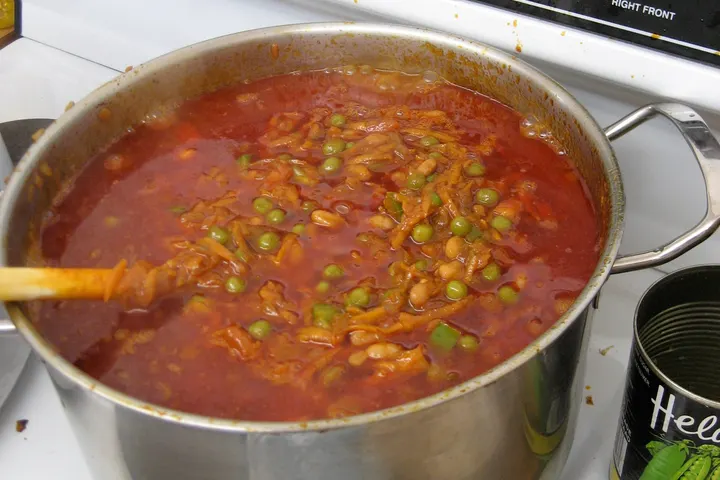
Monkey Gland Sauce
Done beforehand
Sauce · Monkey Gland Sauce
Monkey gland sauce
Sausage
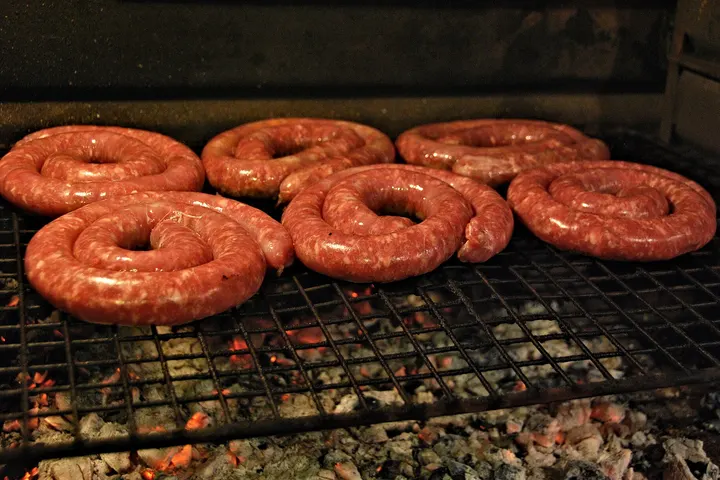
Boerewors
Snack