Sausage
Boerewors
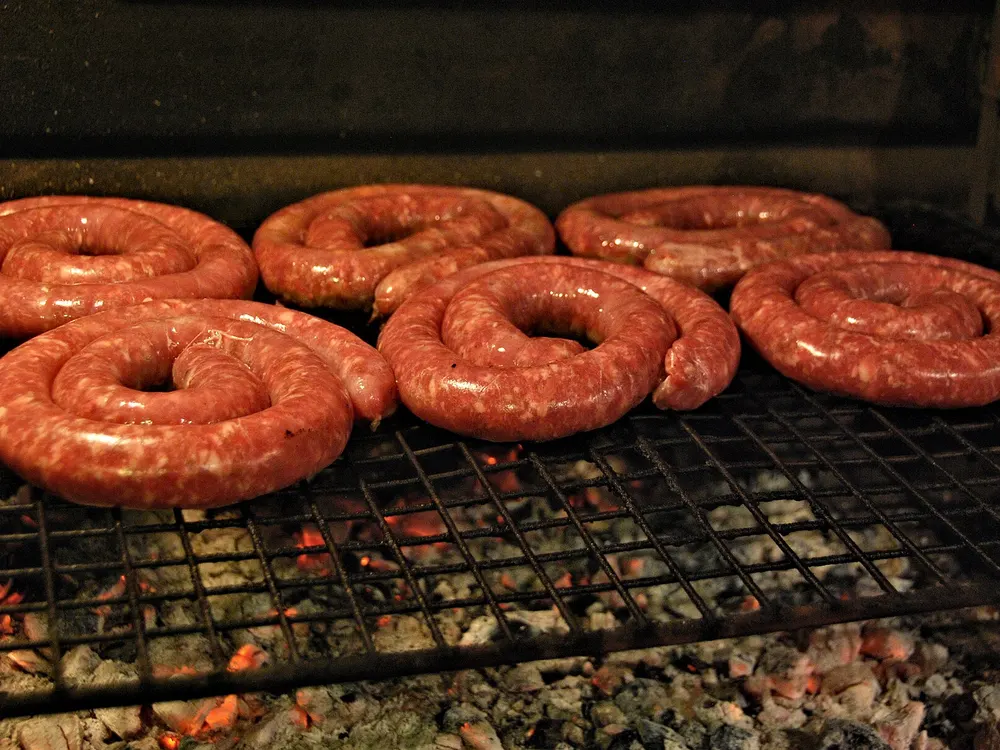
The sausage without which there is no braai. You buy it ready-made — the whole skill is in the fire, and it consists of not making it too hot.
In South Africa boerewors is legally protected. At least 90 percent meat from beef, pork, lamb or goat, no more than 30 percent fat, no offal beyond the casing. That is why it tastes nothing like a bratwurst: it is coarsely cut meat with coriander, not a fine emulsion.
- Prep
- 10 min
- On the fire
- 20 min
- Serves
- 6
- Effort
- easy
How hot
Gentle
You can hold your hand over the grid for 8 seconds · ≈ 150–175 °C
Every coal stage explained →When it goes on
The main round
The actual food: wors, chicken, fish, skewers.
Equipment: Grid
This line
The three-legged pot, sausage as a way of keeping meat, bread without an oven.
Method
-
Out of the fridge half an hour before
Let the wors come up to room temperature on the counter. Fridge-cold sausage takes too long on the outside before the middle is warm — and that is exactly when it splits.
-
Wait until the coals settle
Never braai over flames. The coals want a grey coat of ash, and you should be able to hold your hand a hand's width above the grid for eight seconds. If you can only manage four, wait another ten minutes. That is the whole trick, and it is the mistake nearly everyone makes.
-
Pin the coil
Roll the sausage flat into a spiral and push two skewers through it crosswise. That way you can turn the whole thing in one movement without it falling apart.
-
On the grid, then leave it alone
Lay it on and do not touch it for ten minutes. If fat drips into the fire and a flare shoots up, move the sausage aside — do not put it out with water.
-
Turn it exactly once
After about ten minutes, turn it with tongs. Never pierce it with a fork: that is the juice you were trying to keep. Ten minutes more.
-
Done when it feels firm
Press it with the tongs. Plump and springy means done; soft and yielding means it needs longer. If you want certainty, cut off one end and look — nothing inside should still glisten pink.
-
Rest it five minutes
Off the grid, onto the board, five minutes, then cut into thumb-length pieces. Cut it straight away and the juice ends up on the board.
Tips
- If you avoid only one mistake, make it this one — too hot. A split wors is always a wors braaied too hot, never one braaied too long.
- It is done sooner than you think: 20 minutes is enough. Wors is not a bratwurst you roll around for 40.
- Leftovers go on bread cold the next morning, with chutney. In South Africa that is simply called breakfast.
- In a roll with fried onions and monkey gland sauce it is a boerie roll, the standard food at every sports field and fundraiser in the country.
Boerewors is why nobody in South Africa asks what is being served at a braai. It is on every grid, it is cheap enough for any occasion, and its composition is written into state regulation rather than only into tradition — which few sausages can claim.
You do not make it yourself. You buy it from the butcher who coiled it that morning, and the only thing left to get wrong is the fire. Wors splits over full heat, the fat runs into the coals, the flame comes back, and you end up with charcoal outside and raw inside. Eight seconds on the hand test — the call everyone at the Cape knows, and ignores anyway.
What has to be in it. At least 90 percent meat, no more than 30 percent fat, no offal beyond the casing, no mechanically separated meat; use game and you must name the species. It is seasoned with toasted coriander, pepper, clove, allspice and vinegar. Shopping abroad, that is the list you check against — anything without coriander is not wors, whatever the label says.
And if you do want to make your own: grind coarsely (8–10 mm), 70 percent lean beef to 30 percent fatty pork belly, toast the coriander seed in a dry pan first, bind with vinegar, fill hog casing loosely and dry it uncovered in the fridge overnight. The two recipe sources below spell it out. None of that changes the fire — homemade wors wants gentle coals too.
Where it comes from
- Where the word comes from
- Afrikaans · Literally „farmer’s sausage“ A false friend abroad: what a German butcher sells as Bauernwurst is scalded and fine.
Boerewors comes out of keeping food. If you had stock and no refrigeration, whatever was not eaten at once became sausage — coarsely cut, heavily salted, bound with vinegar. The vinegar was not a flavour decision but the preservation, and it is still in there although refrigerators exist.
The name is younger than the thing. Boer means farmer, wors means sausage; the compound describes not a recipe but a provenance — what was made on the farm, as against what you bought.
What happened next is unusual. On 23 November 1990 Government Notice R. 2718 appeared under the Foodstuffs, Cosmetics and Disinfectants Act of 1972 and set out what boerewors is: at least 90 per cent total meat content, no more than 30 per cent fat, no offal beyond the casing, no mechanically recovered meat. That makes it one of the few foods in the country whose composition is written into the gazette rather than only into custom. In 2022 R. 2410 came alongside it, covering the classification and marking of raw processed meat products generally.
What changed along the way is the fire. On the farm the sausage lay over wood coals because there was nothing else; today it lies there because it tastes better — and because wors splits over coals that are too hot. The rest has stayed: the coil, the coriander, the vinegar.
Watch this
Linked, not embedded — opening this page contacts no outside server. The time marks jump straight to the moment.
22:58
English
Travel Trails Tastes
How to Make Farm Style Boerewors | My Family Recipe
Shows the whole chain from the counter to the grid. Even if you only ever buy wors, you come away knowing what to look for.
- 2:49„Prepping the meat (70/30 ratio)“ — The ratio of lean beef to fatty pork, shown as whole cuts rather than claimed as a number.
- 12:06„Grinding (8-10 mm plate)“ — The mincer plate. This is where wors parts company with a bratwurst: coarsely cut, not finely emulsified.
- 20:09„Day 2: Boerewors on the coals“ — The coil on the grid — and how slowly it is actually braaied.
Differs from us
In the video the sausage rests uncovered overnight in the fridge. We only call for that with homemade wors — shop-bought comes out half an hour before, and that is all.Last checked 2026-09-05
10:20
English
Wolkberg Artisans
How to make Traditional Boerewors | South African sausage recipe
Forty of its own chapter marks, each labelled with a quantity or a step — closer to an illustrated recipe than a video.
- 0:48„Toast for a few minutes“ — The coriander seed in a dry pan. The one step that separates boerewors from any European sausage.
- 4:04„First grind“ — First pass through the mincer — this is where you see how coarse coarse actually means.
- 4:21„Mix until the meat can form a sticky patty“ — The bind test. If the mix does not stick, the sausage falls apart later.
Last checked 2026-09-05
31:45
English
Travel Trails Tastes
Budget Braai Secrets: Tastes Like a Million Bucks
A whole braai from shopping list to plate, with prices. Useful the first time you cook for a crowd.
- 19:06„Boerewors Over Coals“ — Wors over coals in real time — you see how little is supposed to happen.
- 20:09„Pork Loin Chops: Marinade & Fire“ — Marinade and fire side by side: why a sugary marinade has no business over full coals.
Last checked 2026-09-05
38:31
English
Travel Trails Tastes
Perfect South African Braai Platter | Lamb Ribs, Chops, Wors & Braai Broodjies
A complete braai in real time, with the running order as its subject. Long, but the chapters make it usable.
- 13:58„Braai Broodjie Options“ — What may go between the slices and what may not — chutney is not an option, it is the thing itself.
- 25:32„Lamb Chops and Ribs On The Braai“ — Two cuts with very different cooking times on one grid — the actual skill at a braai.
- 32:42„Braai Broodjie Magic“ — The broodjies go on last, onto the coals that are dropping off.
Last checked 2026-09-05
Goes with this
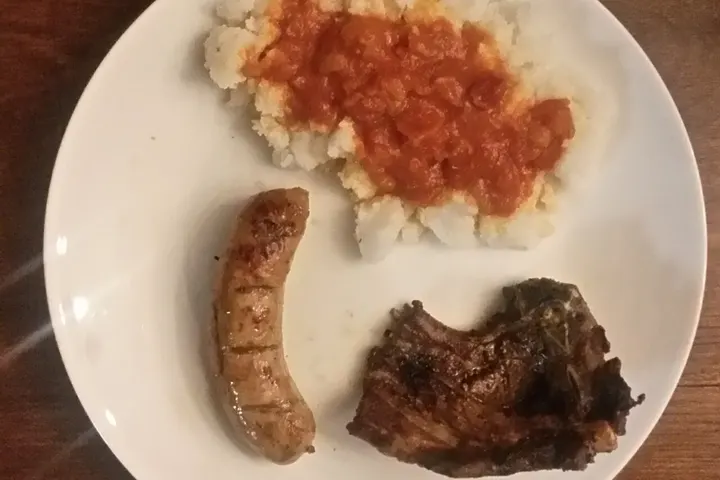
Side · Pap
Pap — stywe pap and krummelpap
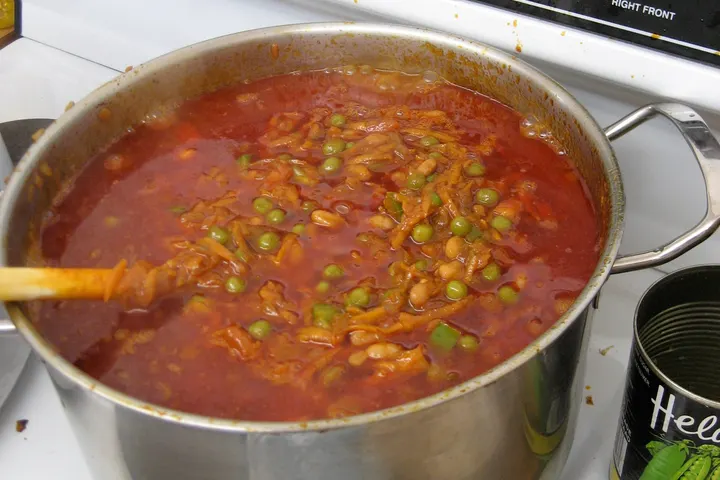
Sauce
Monkey Gland Sauce
Done beforehand
Sauce · Monkey Gland Sauce
Monkey gland sauce
Snack
Braaipastei
Medium
Snack · Braaipastei