Checked in person in Cape Town · as at 03.09.2026
Where do you buy braai wood?
The price is the same everywhere. What you need to know is the type.
We went out and looked instead of researching. The result is not what we expected: comparing prices is pointless because there is nothing to compare. A bag costs between 59 and 69 rand — in every supermarket, in every suburb. The decision that actually changes something is which type you take off the shelf.
The shelf card
To open in front of the shelf: which type for what, what the bag costs, how to spot dry wood. Portrait format for a phone, downloadable and printable.
braai.kaidostudios.de · CC BY 4.0 — reuse it, just credit the source.
Photographed on site
What is actually there
Not a catalogue but the wood store under a built braai in Cape Town and the bags standing next to it. Photographed on 03.09.2026.
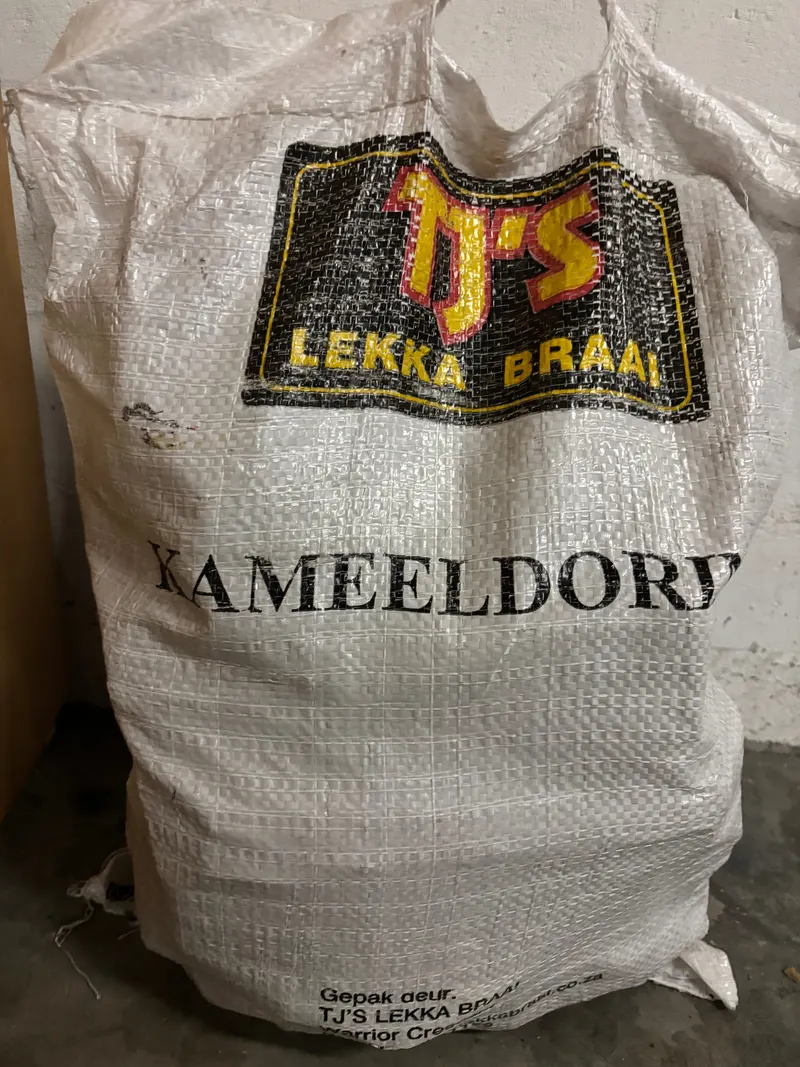
Kameeldoring, packed by TJ’s Lekka Braai
A woven bag with the species printed on it. That is what legal stock looks like: the packer is named, and the same business advertises itself as a supplier of Namibian hardwood.
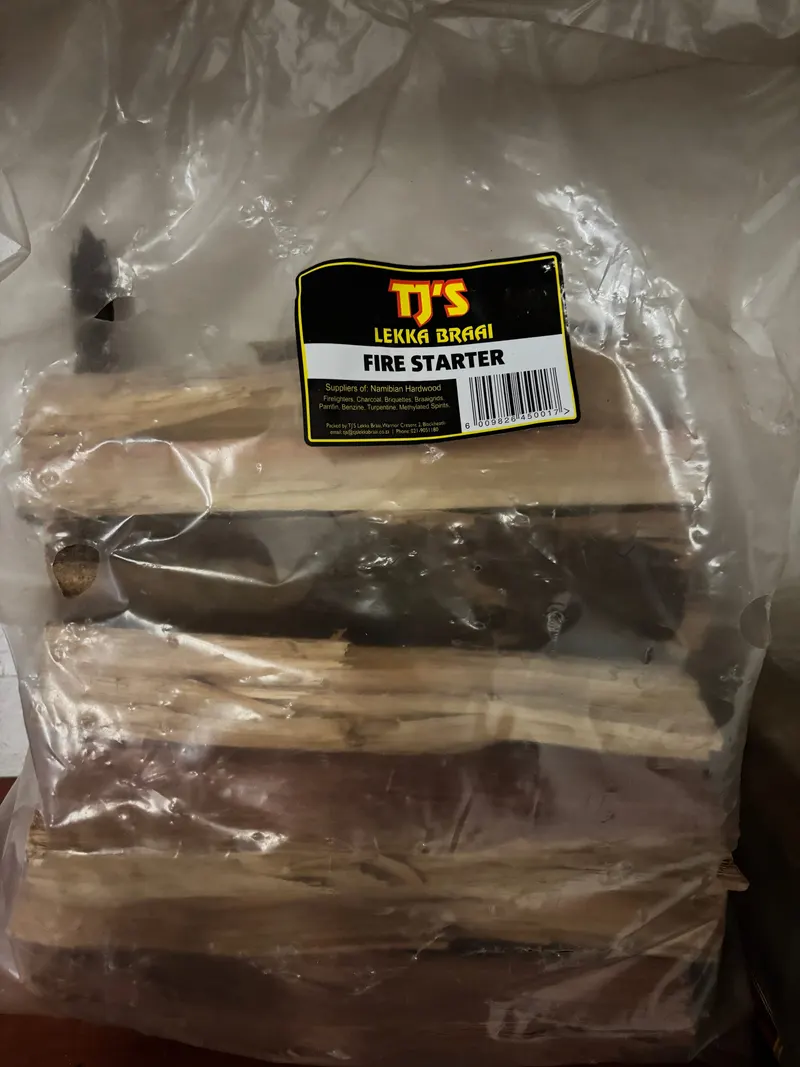
Kindling, sold as a product
The label says Fire Starter, and underneath, what else the business supplies: Namibian hardwood, charcoal, briquettes, grids, paraffin. The wood inside is soft and pale — pine.
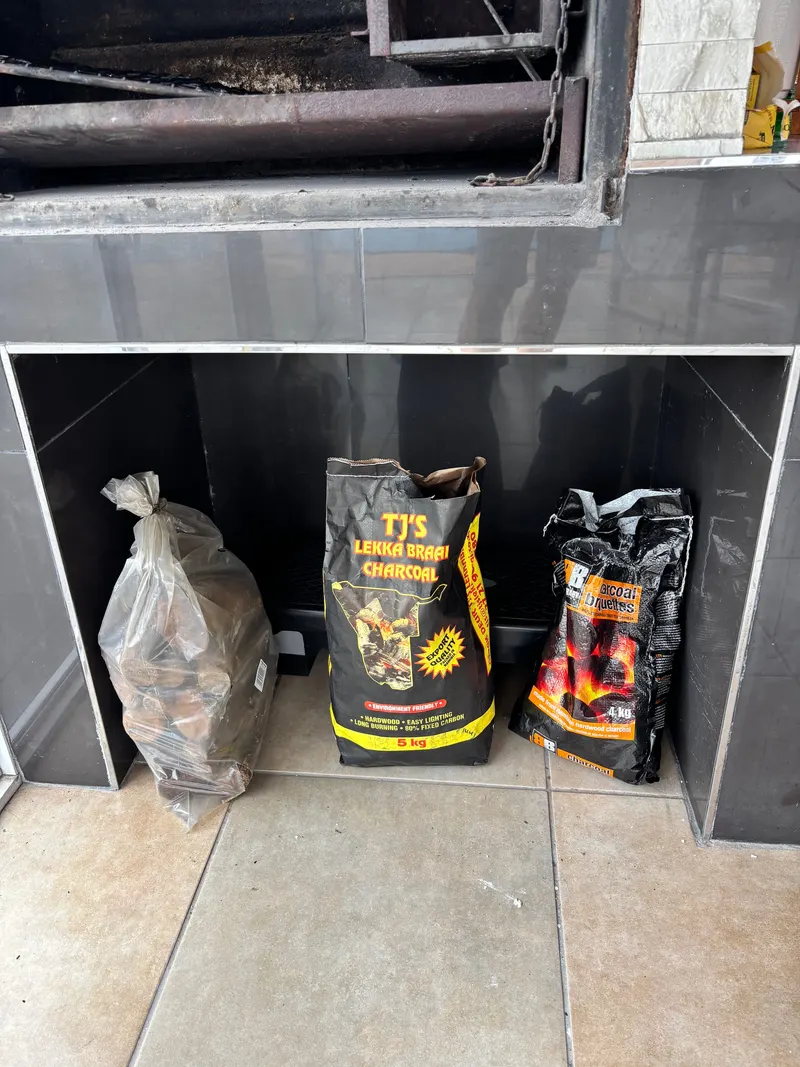
The store under the braai
Logs on the left, five kilos of charcoal in the middle, four kilos of briquettes on the right. Exactly the three options you choose between.
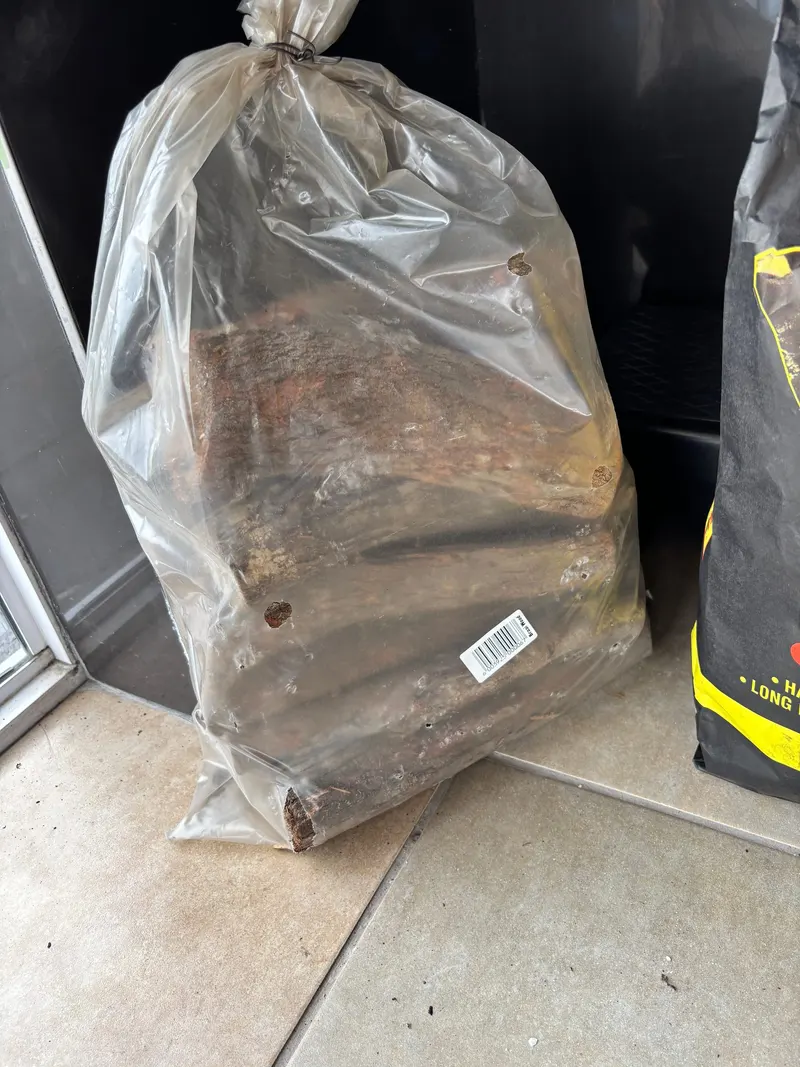
The bag with no label
A clear bag, a barcode sticker, nothing else. The species is not printed — you have to read it off the wood. Which is what the card above is for.

Supermarket firelighters
Twelve pieces, on the shelf next to the wood in any larger shop. Two are enough for a fire if the kindling is dry.
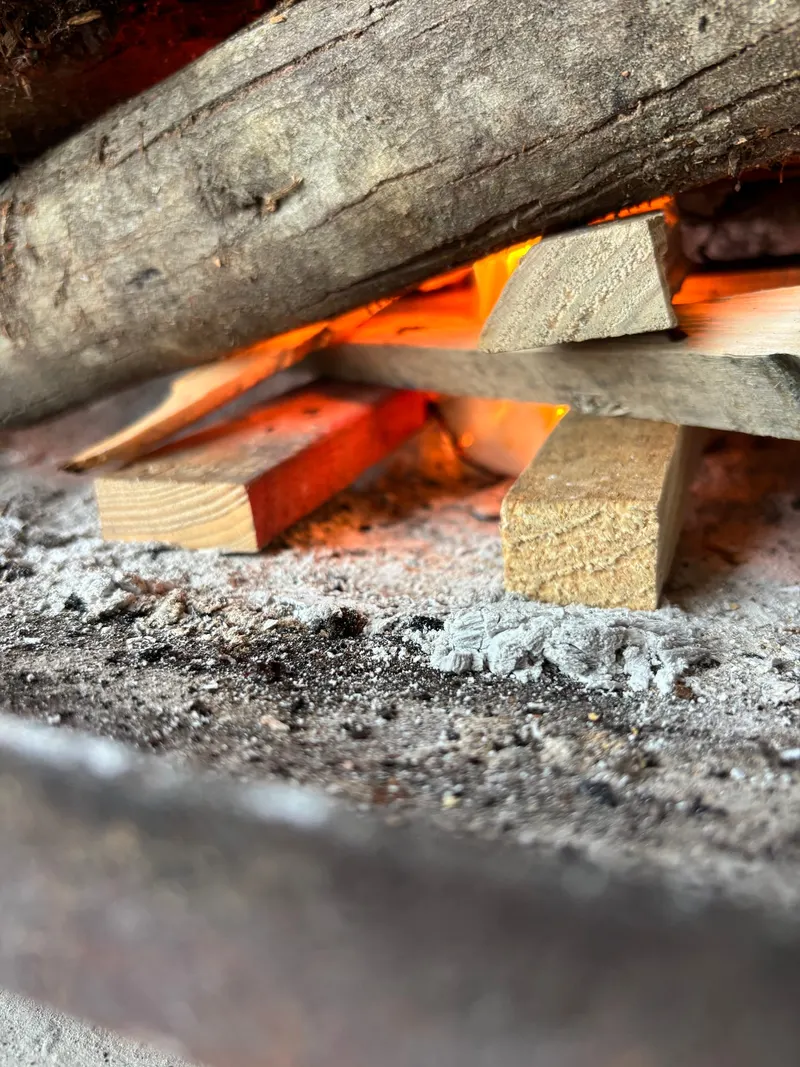
How the kindling sits
Thin pieces under the heavy logs, last time’s ash underneath. That ash can stay — it holds the coals together.
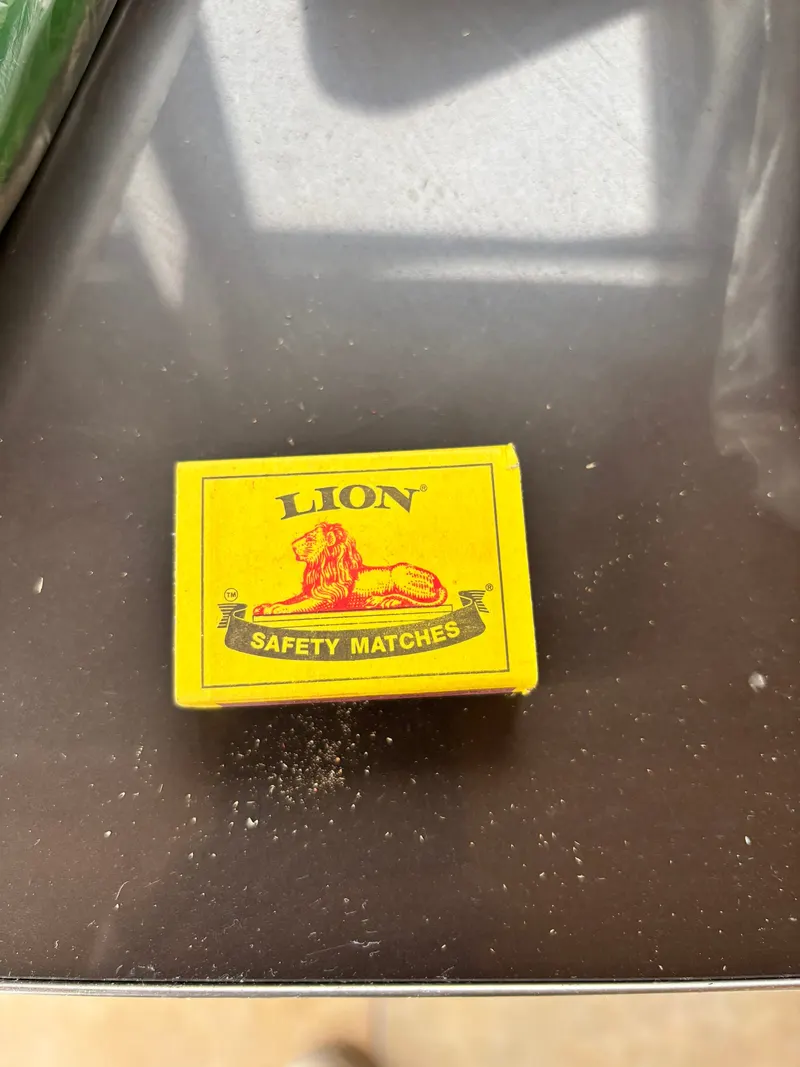
Matches, not lighters
Long matches sit next to every braai in South Africa. A lighter is a good deal less pleasant near a firelighter that has already caught.
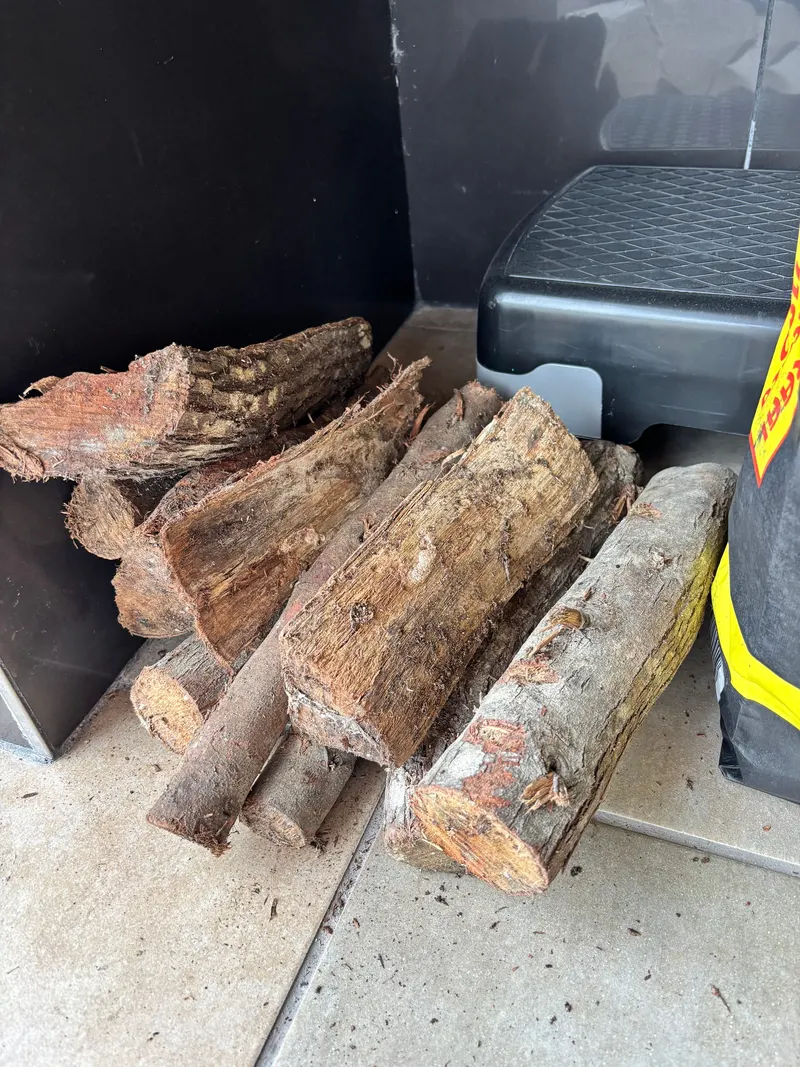
What is in the bag
Split logs with bark and cut faces. The cracks across the ends are what you look for when buying.
What we found on the ground
A bag costs 59 to 69 rand
And practically the same everywhere. A price table would be worthless — the finding that "the price is the same everywhere" is itself the information.
Every supermarket stocks wood
Shoprite, Checkers, Pick n Pay, Spar: braai wood is everywhere, usually next to the charcoal and firelighters. The supermarket is the realistic source, not the merchant.
But not every one stocks both types
Some carry only braaihout, others also kaggelhout for indoors. You cannot just walk in — you have to know what you are looking for.
Large suppliers are hard to reach
Google Maps addresses lead to houses, and the ones who deliver want an order. A garage wall full of wood is too much effort for a single bag.
We found no eucalyptus anywhere
Bluegum turns up constantly in AI recommendations. At the Western Cape it was not on sale anywhere we looked. It is therefore not in our wood list — and it goes in only when somebody actually sees it on a shelf.
Charcoal and briquettes are everywhere
Both work. Wood is still what a braai is about — and that is not a tradition argument but a difference in taste.
Three ways to get wood
For most people
The supermarket
A 7 kg bag of rooikrans carries a braai for four. It is in every larger shop, costs 59 to 69 rand and answers 90 percent of cases. Read the label: braaihout and kaggelhout are two different things.
If you want more
The braai shop
Village Braai at West Coast Village Shopping Centre carries a wide range of wood, gives advice and has its own butchery. 4.0 stars from 10 reviews, phone 067 361 5113. The address for anyone who needs more than one bag or wants to know what they are buying.
From the third bag on
The firewood merchant
Cape Town Firewood, Mother City Firewood and The Wood Gurus all deliver in the city. Considerably cheaper per kilo, but in quantities you have to plan for. Kameeldoring is available here — only buy it with a stated origin.
How much wood do you need?
A practical rule of thumb, not science: a 7 kg bag of rooikrans carries an ordinary braai for four — light it, burn it down, cook for an hour. Larger numbers scale roughly linearly; longer cooks want denser wood.
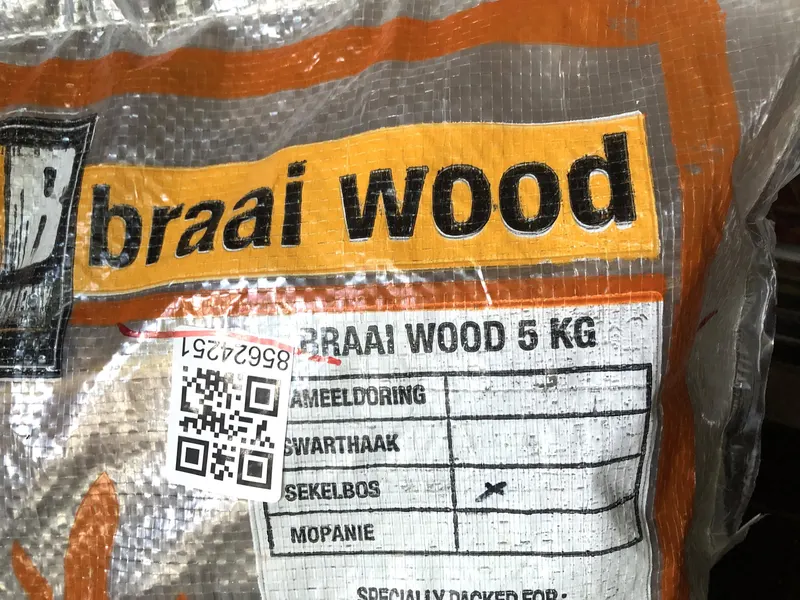
| People | Time at the fire | Quantity | Bags |
|---|---|---|---|
| 2–4 | up to 1 hr | 7 kg | 1 |
| 4–6 | up to 1 hr | 10–12 kg | 1–2 |
| 6–10 | 1–2 hrs | 16–20 kg | 2–3 |
| 10+ | 2–3 hrs | 25–30 kg | 4 |
| Potjie, 4–8 | 3–4 hrs | 20 kg dense wood | 3 |
How to spot dry wood
The sound
Knock two pieces together. Dry wood rings bright and hollow, wet wood sounds dull and heavy. It is a rough test, but the only one you have in the shop.
The cut end
Dry wood cracks as it shrinks. Cracks running out from the centre like spokes are a good sign.
The weight
Water weighs something. The same bag is noticeably lighter when dry — lift two side by side and you feel it at once.
The bark
On well-seasoned wood the bark comes away easily or is already gone. Tight, damp bark suggests freshly cut stock.
Common questions
- What does a bag of braai wood cost in Cape Town?
- Between 59 and 69 rand for a 7 kg bag, surveyed on 03.09.2026 across several supermarkets. The price barely differs between chains — comparing is not worth the trip.
- Where is the best place to buy braai wood?
- The supermarket. Shoprite, Checkers, Pick n Pay and Spar all stock it. For more choice or advice, go to a braai shop such as Village Braai; from the third bag on, a firewood merchant with delivery pays off.
- How much wood do I need for four people?
- One 7 kg bag of rooikrans covers an ordinary braai for four — light it, burn down for 40 minutes, cook for an hour. A three-hour potjie needs about three times that, in denser wood.
- What is the difference between braaihout and kaggelhout?
- Braaihout is mostly rooikrans and makes hot coals quickly. Kaggelhout is a denser, drier mix for a fireplace — usually blue gum, black wattle, red gum, beefwood and Port Jackson. Both sit on the same shelf.
- Can you get eucalyptus braai wood in Cape Town?
- We found none on 03.09.2026, in any supermarket or shop, although it turns up regularly in online recommendations. Until somebody on the ground proves otherwise, it is not on our list.
- How do I tell dry wood in the shop?
- Knock two pieces together — dry wood rings bright. Then: cracks across the cut end, loose bark, and a bag lighter than it looks.
Prices surveyed in Cape Town on 03.09.2026. They move slowly — if you see something different, your observation is right and this page is out of date.
| Rooikrans | R 59–69 je 7-kg-Sack | braai only |
|---|---|---|
| Sekelbos | R 65–90 je Sack | braai only |
| Kameeldoring | R 120–180 je Sack | Braai and fireplace |
| Black Wattle | R 55–65 je Sack | Braai and fireplace |
| Kaggelhout | R 225–300 je Großsack | fireplace only |
| Kiefer | R 40–55 je Sack | lighting only |
Watch this
Linked, not embedded — opening this page contacts no outside server. The time marks jump straight to the moment.
12:47
English
Surrey Hills Smokers BBQ
Braaiwood UK Interview
One of the few video links where the subject is the wood and not the meat.
- 0:25„Interview“ — A trader explains what people ask for in braai wood — and how much of it is marketing.
- 6:42„Fuel“ — The types side by side. If you have never seen rooikrans, this is what it looks like.
Last checked 2026-09-05