Side · In Afrikaans: Pap
Pap — stywe pap and krummelpap
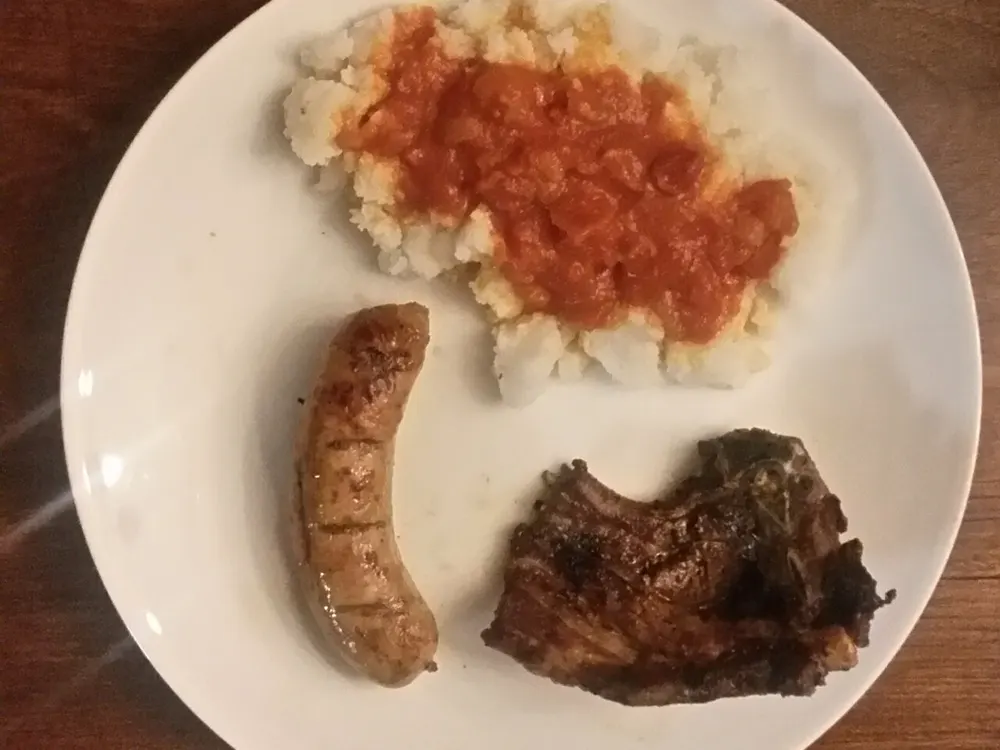
White maize meal, water and salt, and nothing else. Change the ratio and you get either a block you can slice or a crumbly heap — the two sides that go with everything off the fire.
Pap is not a garnish in South Africa, it is a staple. The name is Dutch and simply means porridge. What you buy is white maize meal — super or special maize meal, not the yellow polenta sold in European supermarkets.
- Prep
- 5 min
- On the fire
- 40 min
- Serves
- 6
- Effort
- easy
When it goes on
Done beforehand
Made in the kitchen. On the table before you light up.
Equipment: nothing
This line
Braai as a public affair, butchery and fire in one place, fatty cuts, pap and chakalaka as standard.
Method
-
Get the water properly boiling
Bring the water and salt to a rolling boil in a heavy-based pot. This is not a footnote — in water that is not hot enough the meal clumps immediately, and you will never get those lumps out again.
-
Pour the meal in
Send the maize meal into the centre of the boiling water in a thin, steady stream. Do not stir. Put the lid straight on and turn the heat down low.
-
Steam for five minutes
Lid on, hands off. The steam does the first stage of the cooking — this is where it is decided whether your pap has lumps.
-
Work it through once
Lid off, stir hard with a wooden spoon. For krummelpap use a large fork instead and drag it through until the mass breaks into crumbs — hence the name.
-
Steam for half an hour
Lid back on, lowest heat, 25 to 30 minutes. Fluff it once or twice, no more. Too much stirring makes stywe pap sticky and turns krummelpap smooth again.
-
Let the crust form
For the last five minutes leave the pot entirely alone. A golden, lightly caramelised layer forms on the bottom — in South Africa people argue about who gets it.
-
Serve
Turn stywe pap out as a block and slice it; pile krummelpap up loosely with a fork. Both go to the table hot, before the meat comes off the grid.
Tips
- Published ratios differ widely — from 1 part meal to 3 parts water up to nearly 2 to 3. That is down to the grind. Start with the figures above and correct at the first stir with hot water, never cold.
- Yellow polenta is not a substitute. It tastes sweeter, cooks differently and will never crumble the same way.
- Leftovers get sliced the next day and fried in a pan. That is the second half of the recipe nobody talks about.
Pap is the side dish that tells you whether someone has braaied in South Africa before. It is cheap, it has two ingredients, and it still goes wrong regularly — always for the same reason: water that was not hot enough and too much stirring.
The three consistencies have their own names and their own jobs. Slap pap is thin and belongs to breakfast. Stywe pap is firm enough to slice and sits next to the meat. Krummelpap falls apart into crumbs and gets eaten with your fingers — it is the braai side, because it takes up sauce without going to mush.
To make the difference yourself you only need to understand one thing: it is the same recipe with less water and a fork instead of a spoon.
Where it comes from
- Where the word comes from
- Afrikaans, from Dutch · Literally „porridge“ The crumbly version is *uphuthu* in isiZulu and *umphokoqo* in isiXhosa.
Pap is not a side but the country’s staple — and the word for it is an accident of language history. Pap comes from Dutch and simply means porridge; the grain in it is maize, which reached South Africa through trade and displaced the older sorghum as the base.
That is why the dish has several names, depending on who is cooking. The crumbly version is krummelpap in Afrikaans, uphuthu in isiZulu, umphokoqo in isiXhosa. It is the same process, and the argument about what it should properly be called usually misses the point.
At a braai the firm version comes to the table: stywe pap, solid enough to break off pieces and dip into the sauce. Without sauce it is dry — which is why sheba or chakalaka stands next to it, and why in South Africa the pairing is not a suggestion but standard.
What often gets missed: pap is older than the public form of braai it is most visible in today. In Nguni and Sotho households grain porridge was cooked over wood fire long before there were townships. Shisa nyama gave it a public place, not the recipe.
Watch this
Linked, not embedded — opening this page contacts no outside server. The time marks jump straight to the moment.
6:11
English
J'Something
Pap 3 Ways // Made by J // Something's Cooking TV
Three consistencies from one ingredient, one after the other. Six minutes for what takes text three paragraphs.
- 0:59„Porridge“ — The soft version — breakfast pap, cooked loose.
- 2:02„Dry Pap“ — Stywe pap: firm enough to break off pieces. The version that belongs with a braai.
- 3:43„Breakfast Pap“ — The third route — one ingredient, three completely different results.
Last checked 2026-09-05
6:55
English
Wanna Cook
How to Cook Braai Pap | Wanna Cook
The one move where pap fails — adding the meal — shown large.
- 0:55„Add Starter“ — How the meal goes into boiling water without lumping.
- 1:47„Simmer“ — The time you leave the lid on. Stirring makes it worse, not better.
Last checked 2026-09-05
Goes with this
Sausage
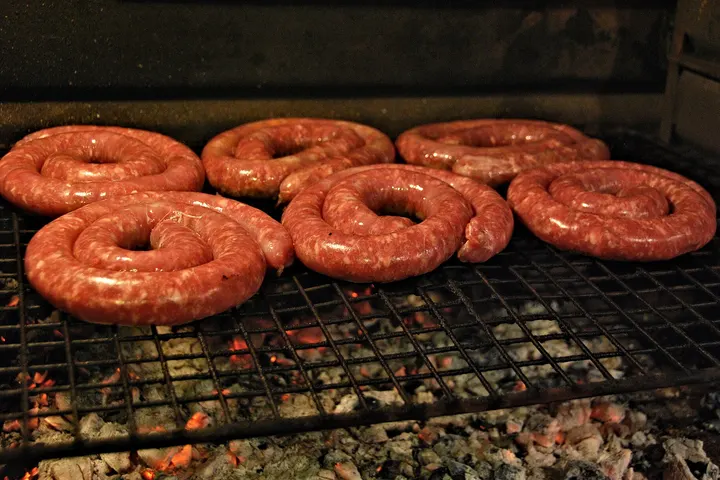
Boerewors
Sauce
Monkey Gland Sauce
Done beforehand
Sauce · Monkey Gland Sauce
Monkey gland sauce
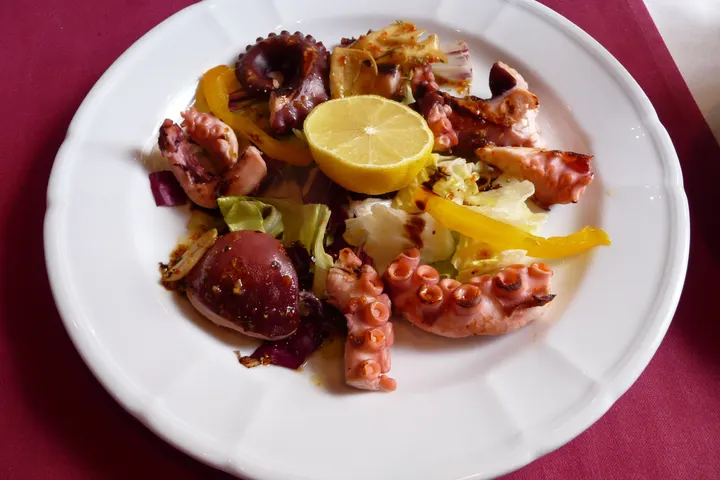
Fish · Calamari op die kole