Side
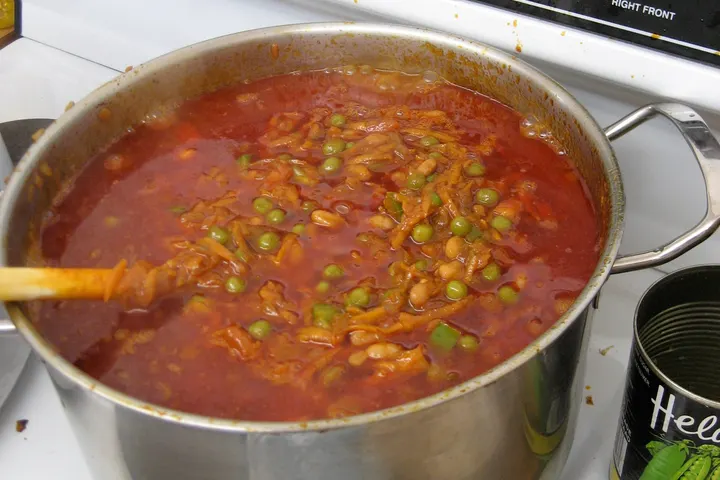
Chakalaka
A hot vegetable relish with curry, carrot, peppers and baked beans in tomato sauce. Eaten warm, at room temperature or cold, and served next to the pap rather than on the grid.
Line of origin · 20th century to today
Shisa nyama is isiZulu for burn the meat, and it names the public form of braai that grew out of township butcheries: you choose raw meat at the counter, have it weighed, and have it cooked over the coals.
Signature: dash-dot
It is the most widespread public form of braai in the country — and on German-language braai sites it does not appear at all.
Brought to the fire
Braai as a public affair, butchery and fire in one place, fatty cuts, pap and chakalaka as standard.
What came with it
The form grew out of a business problem. Township butchers wanted to move more meat over the weekend and began cooking it on the spot over coals and selling it ready to eat. The sales trick became a meeting place: today these are places where people from every walk of life turn up.
The routine is much the same everywhere. You pick what you want at the counter, it is weighed and paid for, then it goes on the grid — either someone cooks it for you or you stand there yourself. Pap, chakalaka and something to drink go with it. People eat at long tables, often standing.
One thing matters for placing it: the word names the form, not the dishes. Pap and umngqusho — samp and beans — are far older and come out of Nguni and Sotho households, where they were staple food long before there were townships. What shisa nyama added is the public place where they stand next to the meat off the grid.
The spelling moves around: shisa nyama, chisa nyama, chesa nyama, shisanyama. It all means the same thing.
Who is writing here
Nobody here is writing from a township. What is on this page comes from the sources linked below — two of them South African — and from watching as a guest, not from lived experience. The history of this form of braai is bound up with apartheid and forced removal; it is named here and not dressed up.
Side
A hot vegetable relish with curry, carrot, peppers and baked beans in tomato sauce. Eaten warm, at room temperature or cold, and served next to the pap rather than on the grid.
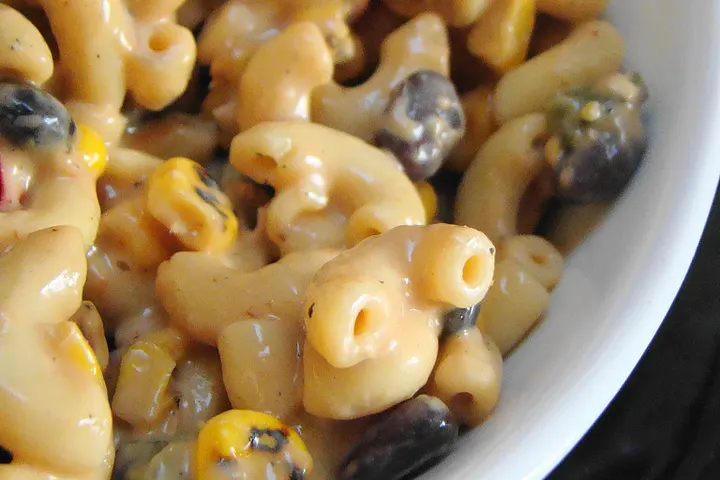
Side · Chakalaka-pastaslaai
Fusilli with chakalaka, baked beans and a spoon of mayonnaise. Four ingredients, ten minutes' work — and the hottest salad on the table.
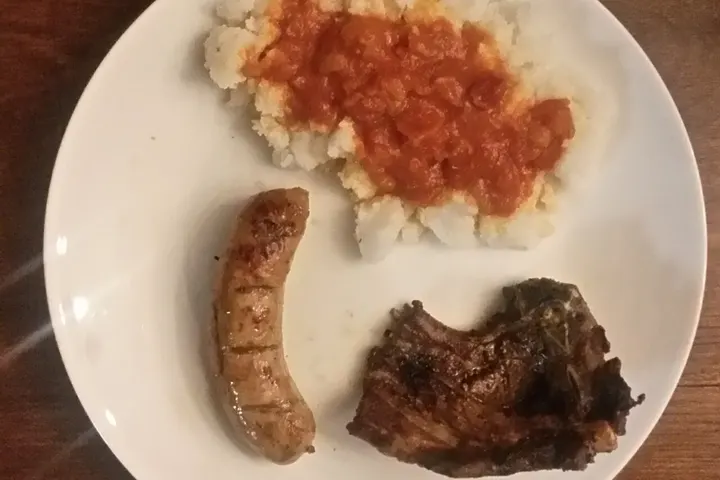
Side · Pap
White maize meal, water and salt, and nothing else. Change the ratio and you get either a block you can slice or a crumbly heap — the two sides that go with everything off the fire.
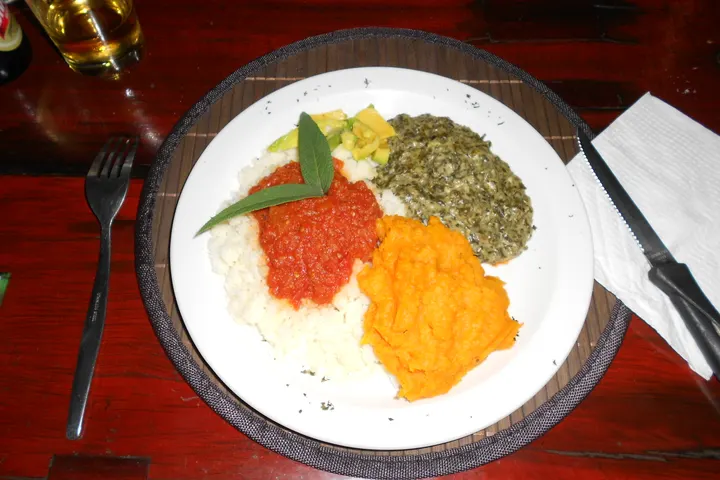
Sauce
A slowly reduced tomato and onion sauce that belongs to pap the way butter belongs to bread. An hour on a low flame is all it needs — but it really does need that.
Side
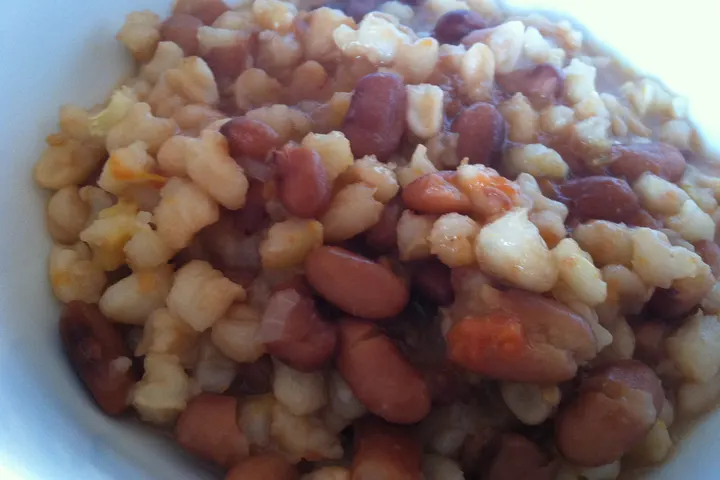
Stamped maize and sugar beans, boiled for two hours until everything collapses into something creamy. One pot, two ingredients, and the whole table is fed.
Bread · Vetkoek met maalvleis
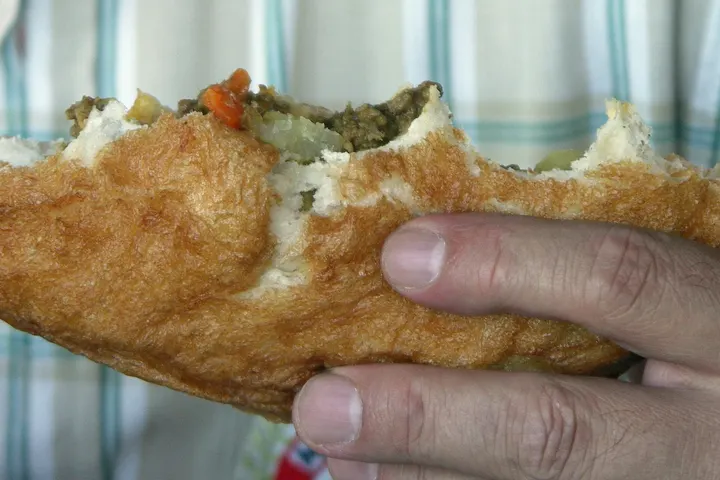
Yeast dough deep-fried until golden, split open and filled with mild curried mince. Crisp outside, airy inside — the street food every South African knows.
Meat · Murgbene
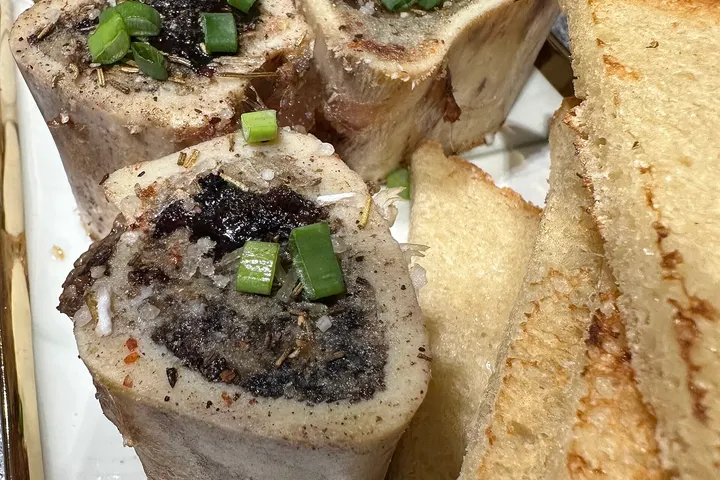
Beef marrow bones split lengthways over hot coals until the marrow bubbles, with parsley salsa and toasted bread. Twenty minutes for the richest starter a fire can produce.
Meat
Skilpadjies
Medium
Meat
Seasoned lamb's liver wrapped in caul fat and cooked crisp over medium coals. The name means little tortoises, and it describes exactly what ends up on the grid.
Side · Mielies
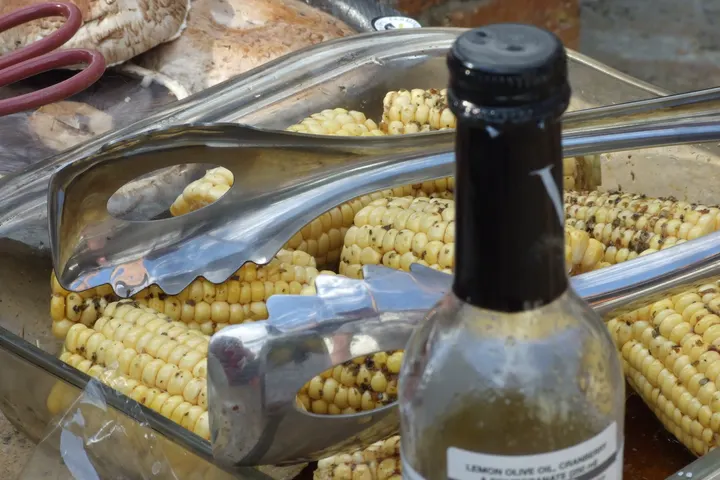
Corn cobs, first cooked in foil and then charred open over the coals, with herb or curry butter. Foil first, then straight onto the coals: that is what makes it soft inside and dark outside.
Linked, not embedded — opening this page contacts no outside server. The time marks jump straight to the moment.
6:11
English
J'Something
Three consistencies from one ingredient, one after the other. Six minutes for what takes text three paragraphs.
Last checked 2026-09-05
6:55
English
Wanna Cook
The one move where pap fails — adding the meal — shown large.
Last checked 2026-09-05