Meat
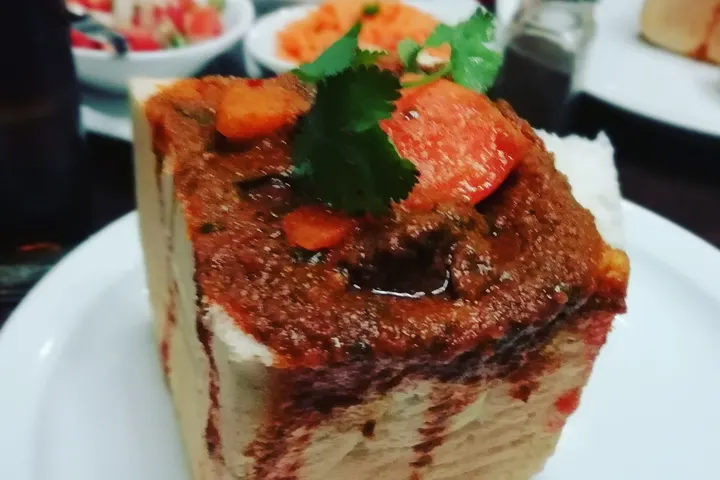
Bunny chow
A fiery Durban lamb curry in a hollowed-out quarter loaf of white bread. No plate, no cutlery — the bread is both, and it gets eaten at the end.
Line of origin · from 1860
The Durban line goes back to Indian indentured workers brought to Natal from 1860; it gave the country its curry and a meal whose container you eat.
Signature: short dashes
On 16 November 1860 the Truro docked at Port Natal with 342 indentured workers from Madras aboard. A straight line runs from that number to the bunny chow.
Brought to the fire
Curry as everyday food, bread as a vessel, the curry powder on the supermarket shelf.
What came with it
After the end of slavery the sugar estates in Natal were short of labour. Between 1860 and 1911 around 152,000 people came from India under indenture — five years of work for ten shillings a month, with housing and rations. Conditions were hard; in 1911 India stopped the traffic to Natal over the treatment of its nationals.
Those who stayed after their contracts ran out often opened a small shop or a street stall. Those stalls are where the dish Durban is known for comes from. The sources do not agree on the name: the most common derivation takes bunny from bania, the merchant caste, with chow as slang for food.
The dating is likewise unsettled — the 1860s are named for the first curries served in disposable containers, the 1930s and 1940s for the hollowed loaf in its present form. Both stand here, because neither date can be pinned down cleanly.
Meat
A fiery Durban lamb curry in a hollowed-out quarter loaf of white bread. No plate, no cutlery — the bread is both, and it gets eaten at the end.
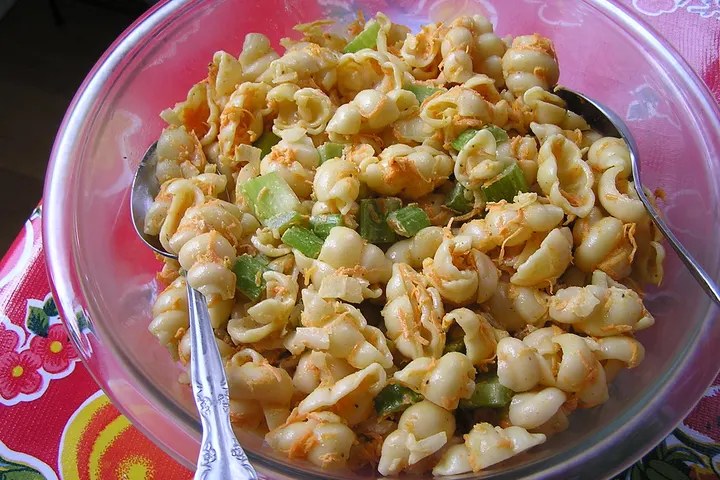
Side · Kerrie-noedelslaai
Tricolour fusilli in a sweet-sour curry dressing, left overnight. In South Africa it is kerrie-noedelslaai, and no bring-and-braai is without it.