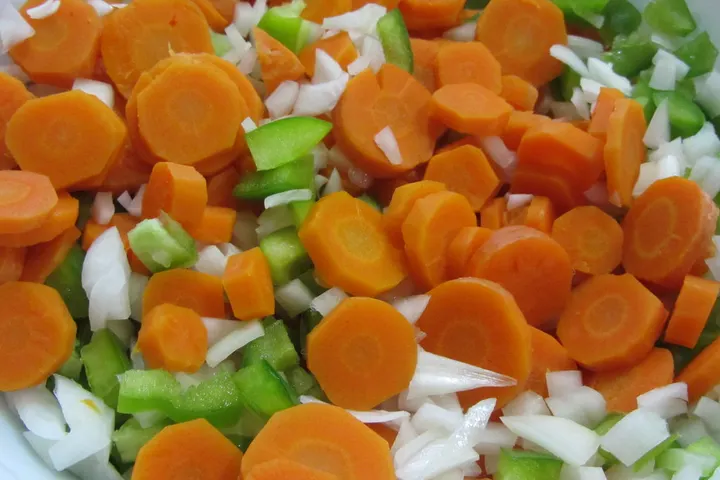
Side · Koperpennie-slaai
Copper penny salad
Carrots cut into rings with pepper and onion, drowned in a hot sweet-sour tomato sauce and left overnight. The name comes from the shape of the slices.
Line of origin · 1806 to 1961
The British line is the thinnest and at the same time the most visible: it contributed almost no main dish, but nearly everything that sits on the table next to the meat.
Signature: double
Chutney, a sauce and three kinds of salad — that is the British share of a braai, and it is bigger than it sounds.
Brought to the fire
Chutneys, marinades, side salads — and the word chop.
What came with it
The British occupied the Cape first in 1795 and again in 1806; in 1961 South Africa became a republic and left the Commonwealth. A century and a half in which everyday cooking was shaped less by recipes than by products.
The most lasting of those is chutney. It does not come from England but through England from India — and it now sits in almost every South African fridge. Braaibroodjies without chutney are toast; ribbetjies without chutney are dry ribs.
The origin story of the best-known brand is a good lesson in how careful you have to be with kitchen legends. The official telling traces the recipe to an Indian cook shipwrecked off the South African coast in 1852. Reporting on it disagrees: the wreck is dated to 1872, the family married in King William’s Town in 1852, and the recipe itself came from the mother, who began selling chutney around 1870. Both versions circulate; the second is the documented one.
On the meat side, the British period left words above all. Stand at a South African counter and you read English cut names — and you need to know that silverside is not what a German butcher would hand you under a similar name.
Side · Koperpennie-slaai
Carrots cut into rings with pepper and onion, drowned in a hot sweet-sour tomato sauce and left overnight. The name comes from the shape of the slices.
Sauce
Monkey Gland Sauce
Done beforehand
Sauce · Monkey Gland Sauce
A dark, sweet-and-sour steak sauce of chutney, tomato sauce, Worcestershire and onion. On South African menus since the 1930s — and, to get it out of the way, containing no monkey glands whatsoever.
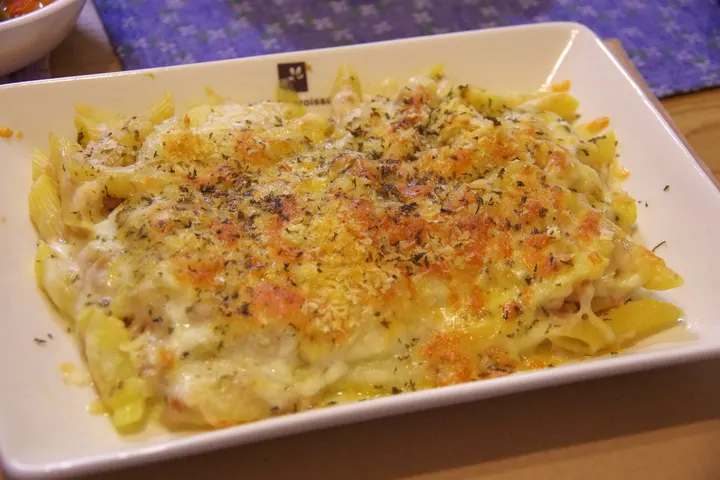
Side · Aartappelbak
Thinly sliced potatoes layered with onion, cream and brown onion soup powder, an hour and a half in the oven. The side that is finished at any braai before the fire is even lit.
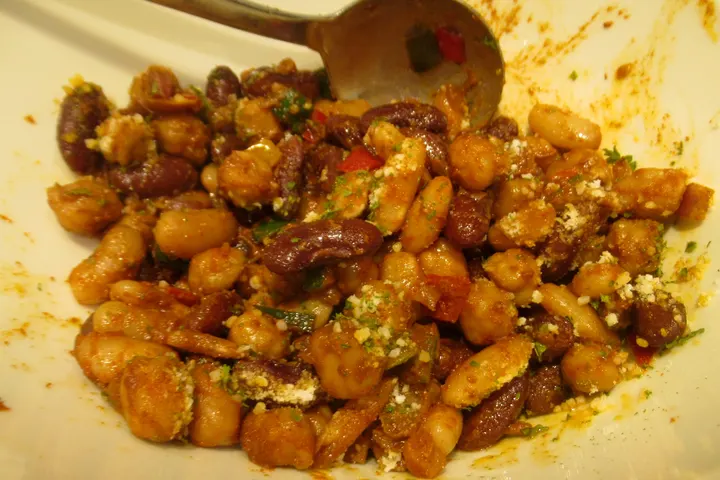
Side · Driebone slaai
Green beans, butter beans and kidney beans in a sweet-sour dressing, best made the day before. The salad on every bring-and-braai table.
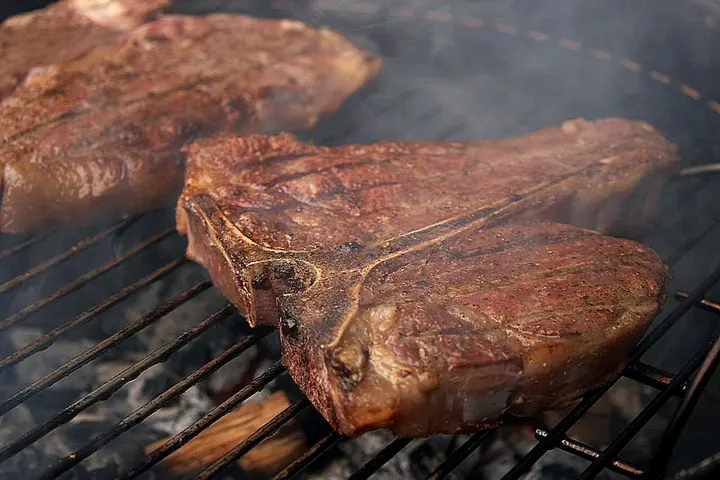
Meat · T-bone tjop
A thick T-bone over full coals, seasoned with home-mixed braai salt of toasted coriander, salt and paprika. Two seconds on the hand test — this is searing, not cooking.
Meat
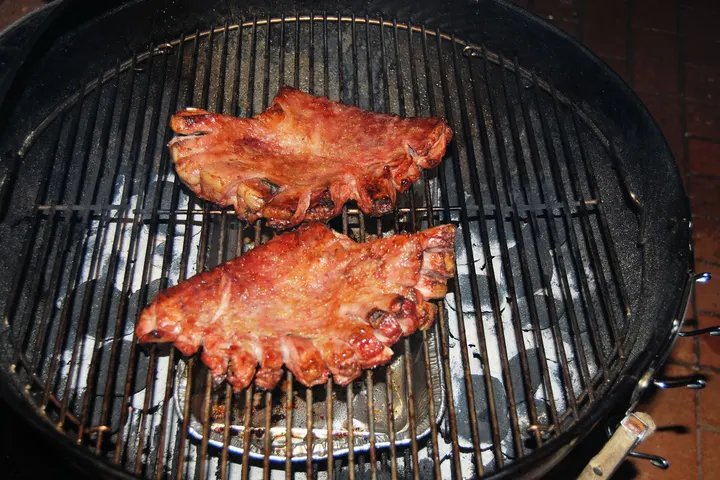
Pork ribs, first cooked tender in the oven for an hour and a half, then marinated overnight in a chutney glaze and finally taken sticky over mild coals. Without the pre-cooking they stay tough — no marinade will soften a rib on its own.
Bread
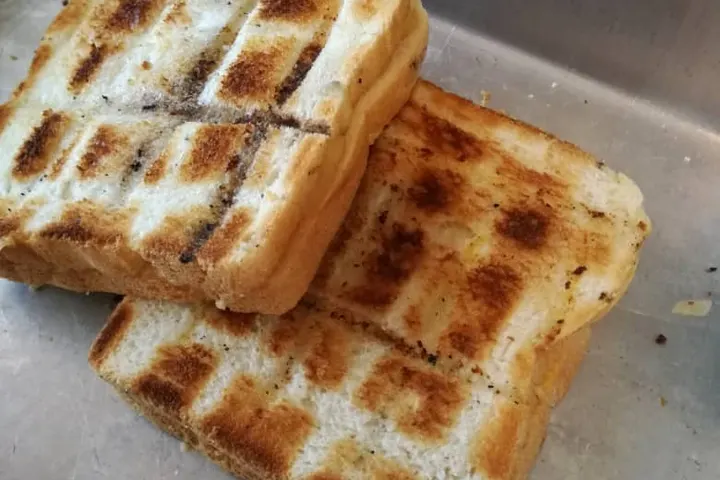
Toasted sandwiches with cheese, tomato, onion and fruit chutney, cooked in a hinged grid over the last of the coals. Reckon on two per person — there is never one left over.