Side
Umngqusho
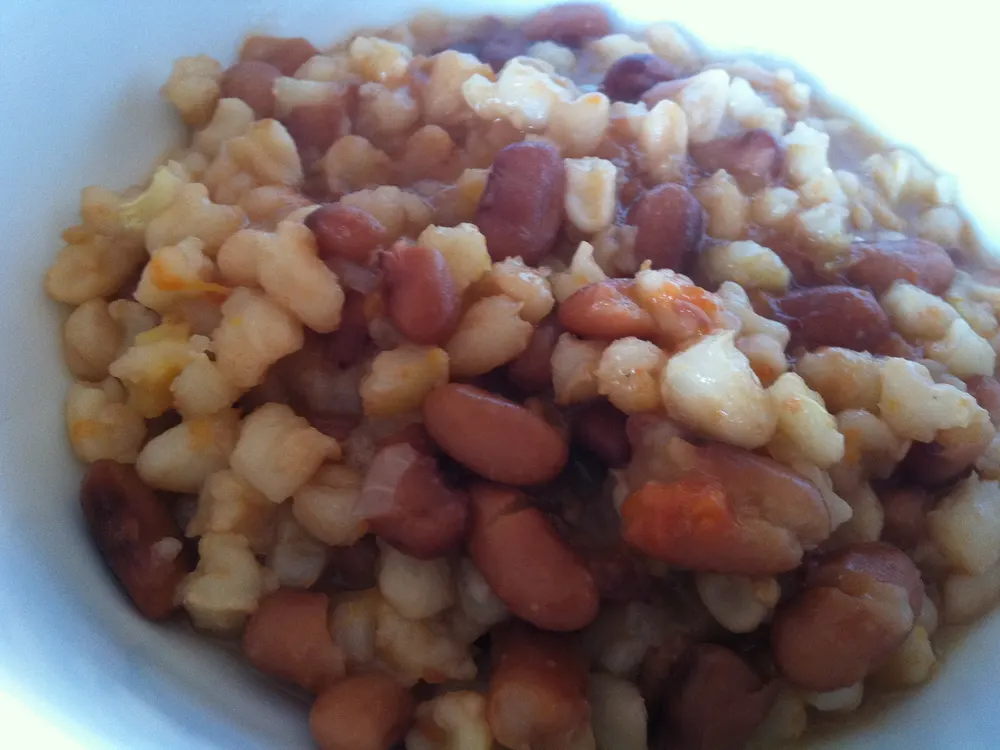
Stamped maize and sugar beans, boiled for two hours until everything collapses into something creamy. One pot, two ingredients, and the whole table is fed.
Umngqusho is a Xhosa dish; the Zulu call the same thing isitambu. Samp is maize with the hull stamped off and the kernels broken coarsely — bigger than grits, smaller than whole corn. Nelson Mandela named it as his favourite dish, and in South Africa that is the first sentence anyone says about umngqusho.
- Prep
- 15 min
- Marinating
- 8 hr
- On the fire
- 2 hr
- Serves
- 6
When it goes on
Done beforehand
Made in the kitchen. On the table before you light up.
Equipment: Potjie
This line
Braai as a public affair, butchery and fire in one place, fatty cuts, pap and chakalaka as standard.
Method
-
Soak overnight
Soak the samp and beans together in plenty of cold water, at least eight hours. Skip it and you will be cooking for three hours instead of two — and the beans will still be hard.
-
Get it going
Drain the soaking water, cover with a litre and a half of fresh water, add the salt and bring to the boil once.
-
An hour and a half of simmering
Cover and simmer over medium heat for ninety minutes, stirring occasionally. Top up with water when it dries out — it should stay just covered.
-
Add the vegetables
Stir in the onion, potato and carrot and cook uncovered for another thirty minutes until the vegetables are soft and the whole thing thickens.
-
Stir in butter
Fold in the butter and season with salt and pepper. Umngqusho should be creamy, not soupy — if there is too much liquid, boil it off uncovered.
Tips
- In a three-legged pot over low coals it behaves exactly as it does on a hob. Two hours are two hours, whatever the heat comes from.
- The meat version cooks a piece of beef or a boiling fowl along with it. Then it stops being a side dish and becomes the meal.
- It keeps three days in the fridge and comes back to creamy with a splash of water when reheated.
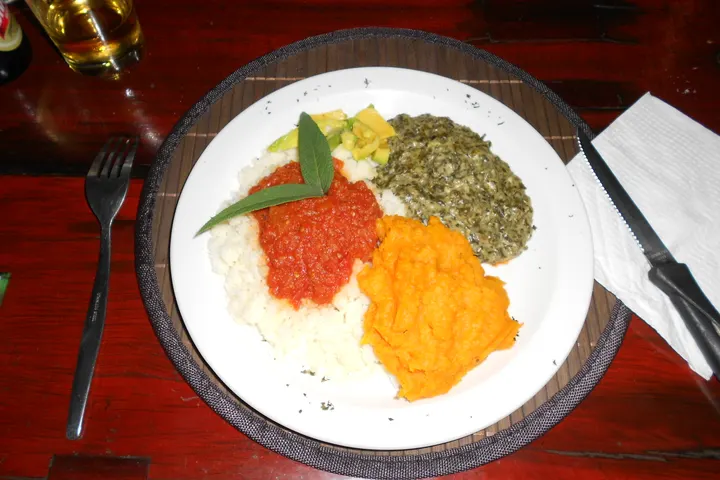
- Serve chakalaka or sheba with it. Plain umngqusho is a foundation, not a meal.
Samp is maize whose hull has been stamped off in a mortar. What is left is coarsely broken and takes a long time — which is why it is cooked together with beans, which take just as long.
The result is one of the cheapest dishes in the country and at the same time one of the best known. Umngqusho is served at funerals, at weddings, and on Mondays, and the question is never whether there is any, but what goes with it.
At a braai it is the side dish you forget about. It is already sitting there when the fire is lit, it does not go cold, and it is still good the next day. Of every side on this site, it asks for the least attention.
Where it comes from
- Where the word comes from
- isiXhosa · Literally „samp and beans“ The q is a click, made against the palate. In isiZulu the same dish is *isitambu*.
Umngqusho is a Xhosa staple, and in isiZulu the same dish is isitambu. Samp is maize with the hull knocked off and the kernels coarsely broken — bigger than meal, smaller than whole grain. With it, sugar beans, water, time.
The method is the actual story. Samp and beans are soaked overnight and then cooked for hours until the starch comes out and the whole thing turns creamy. That is not skill but patience — and in a household without electricity it was how cheap ingredients filled people up.
Outside South Africa it became known as Nelson Mandela’s favourite dish. Inside the country it does not need that introduction: it has been on Xhosa tables for as long as there has been maize, and it is there at a celebration as much as on an ordinary Tuesday.
At a fire it has a fixed place next to the meat, usually at a shisa nyama. One thing matters for placing it: the dish is far older than that public form of braai. Shisa nyama gave it a place, not the recipe.
Sources for this section
Watch this
Linked, not embedded — opening this page contacts no outside server. The time marks jump straight to the moment.
19:29
English
Travel Trails Tastes
Fall-Off-The-Bone Oxtail Recipe | South African Potjie Method
Pairs oxtail with umngqusho rather than potatoes — the combination people actually eat at the Cape.
- 10:10„Slow Cooking the Potjie“ — The hours in which nothing happens — and how small the fire has to be for them.
- 12:13„Preparing the Samp & Beans“ — Samp and beans alongside: the dish that belongs with it in South Africa, in the same video.
Last checked 2026-09-05
After recipes by
Goes with this
Sauce
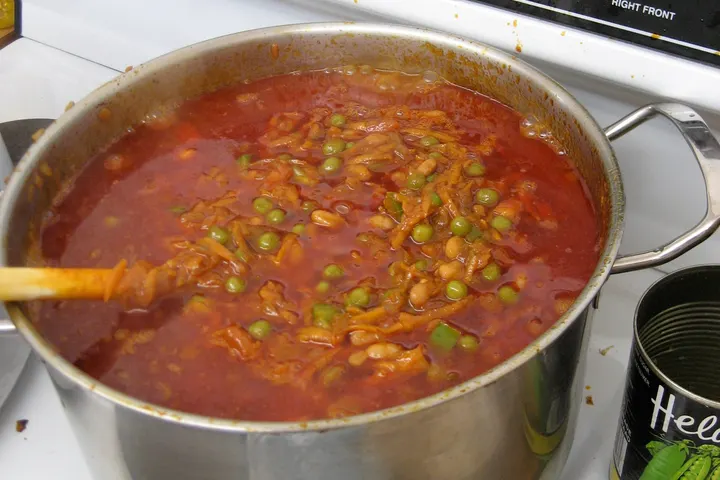
Sheba
Sausage
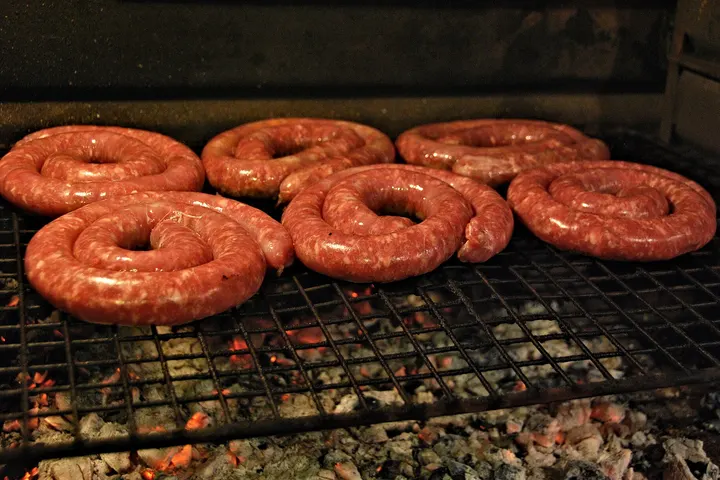
Boerewors
Fish · Calamari op die kole