Meat
Bobotie
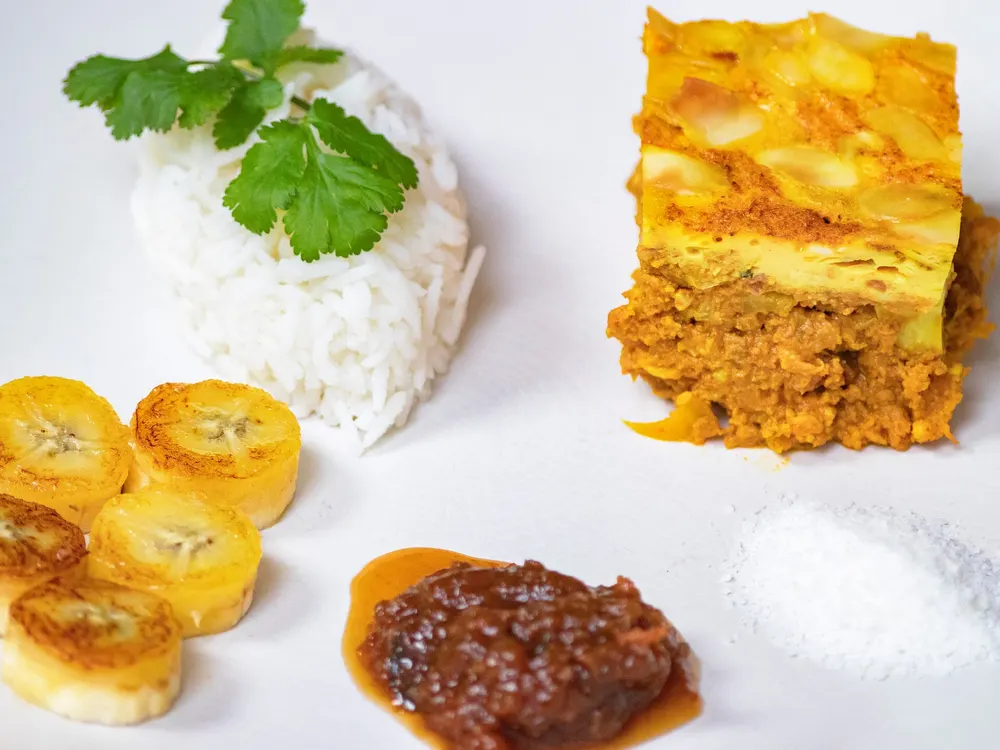
Spiced beef mince with chutney, raisins and soaked bread, baked under a golden egg custard. If South Africa has a national dish, this is it.
Bobotie is Cape Malay in its purest form: a European mince bake seasoned with the flavours that reached the Cape through the spice trade and through the people the East India Company brought here in slavery. The bay leaves on top are not decoration but part of the tradition.
- Prep
- 35 min
- On the fire
- 45 min
- Serves
- 6
- Effort
- medium
When it goes on
Done beforehand
Made in the kitchen. On the table before you light up.
Equipment: Oven
Method
-
Soak the bread
Soak the bread in 250 ml of milk until completely saturated. Squeeze it out and keep the milk — it goes into the custard.
-
Onions and spices
Heat the oil, soften the onions, add garlic briefly. Add masala, turmeric and cumin and toast for a minute until fragrant.
-
Brown the mince
Add the mince and fry until no pink remains, keeping it crumbly. Do not mash it fine — bobotie should have structure.
-
Sweet and sour
Stir in chutney, jam, raisins, lemon juice, the squeezed bread and salt. Simmer gently for 15 minutes. The mixture should be moist but not soupy.
-
Fill the dish
Spoon into a buttered dish and level it, but do not press it down. The custard has to seep in a little.
-
Custard
Whisk the reserved milk with the second measure of milk, the eggs and salt and pour over the mince. Stand the bay leaves upright in it.
-
Bake
30 to 45 minutes at 180 °C, until the custard has set and gone golden. Rest for ten minutes before cutting.
Tips
- The classic accompaniment is geelrys — yellow rice with turmeric and raisins. It is not optional, it is the second half of the dish.
- At the fire, bobotie works in a cast-iron pot with coals on the lid. Nearer 50 minutes then, with a look now and again.
- For less sweetness, leave out the jam and keep the chutney. Without any sweetness the curry loses its counterweight.
Bobotie is South African food history summarised on a plate. The construction — mince, custard, baking dish — is European and arrived with the Dutch. The spices are Southeast Asian and arrived with the people the East India Company brought to the Cape in slavery.
What came of it follows a logic you meet across half the country: sweet against sour, with curry as the join. Chutney and apricot on one side, lemon and onion on the other, turmeric and masala in between.
The soaked bread is not a filler. It holds moisture in the mixture, and without it bobotie goes dry and crumbly — the commonest failure with this dish.
Where it comes from
- Where the word comes from
- Afrikaans, origin disputed · Literally „no settled meaning“ A common derivation points to Indonesian *bobotok*; it is not settled.
Bobotie is the dish that explains Cape Malay cooking best: a European mince bake with a seasoning that comes from no European kitchen. The construction — meat, bread soaked in milk, an egg custard on top — sits in seventeenth-century Dutch household cooking. Turmeric, curry, raisins and chutney do not.
The route those spices took to the Cape is known and it is not comfortable. From 1658 people were brought in bondage from the Indonesian archipelago, the Indian coast, Ceylon, Madagascar and East Africa to the Dutch East India Company’s station. They cooked in the households they were made to work in — and what grew out of that was neither of the two cuisines but a third.
The sources do not agree on the name. A common derivation takes it from Indonesian bobotok, a dish wrapped in leaves and steamed; that is not documented. What is documented is the route the ingredients took, and that is enough.
You see little of this at the grid — bobotie comes out of an oven. It is made at the fire anyway, in a cast-iron pan with coals on the lid, and then you taste the smoke in the custard.
Watch this
Linked, not embedded — opening this page contacts no outside server. The time marks jump straight to the moment.
28:17
English
Travel Trails Tastes
Cape Malay Bobotie | How I Made South Africa's Most Iconic Dish Over Fire
Cooks bobotie over fire rather than in an oven and takes time over the origin. Both are unusual.
- 0:00„Introduction & Heritage Story“ — Six and a half minutes of origin before anything hits the pan. Exactly the part recipe sites leave out.
- 6:39„Frying Cape Malay Flavours in the Cast Iron Pot“ — The spices in hot fat — this is where bobotie decides whether it tastes of anything.
- 13:40„The Custard Topping Secret“ — The egg topping that turns a mince bake into a bobotie.
Last checked 2026-09-05
9:49
English
Articook
Bobotie Recipe - Classic South African Casserole
Eleven of its own chapter marks in ten minutes — you jump straight to the step you are stuck on.
- 0:25„Soak bread in milk“ — The soaked bread — the step that keeps the mix loose instead of dense.
- 4:50„Add fruit chutney“ — Chutney as an ingredient, not a condiment. Here you see the amount.
- 7:05„Mix eggs topping“ — The egg-to-milk ratio for the topping.
Last checked 2026-09-05
Goes with this
Side · Pap
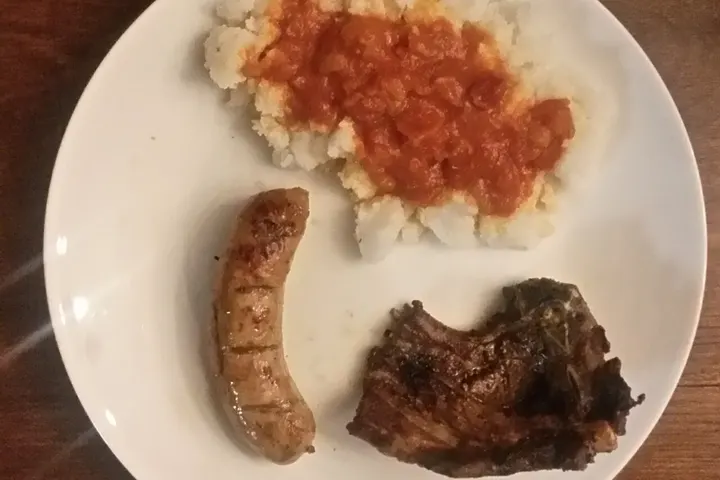
Pap — stywe pap and krummelpap
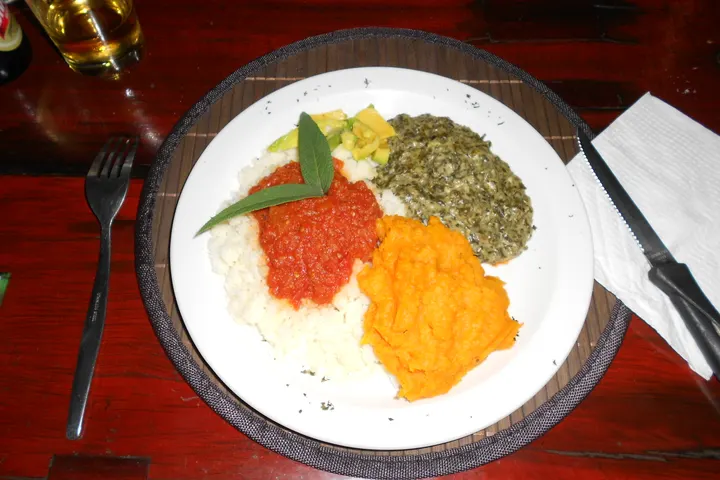
Sauce
Sheba
Fish · Calamari op die kole