Sweet
Koeksisters
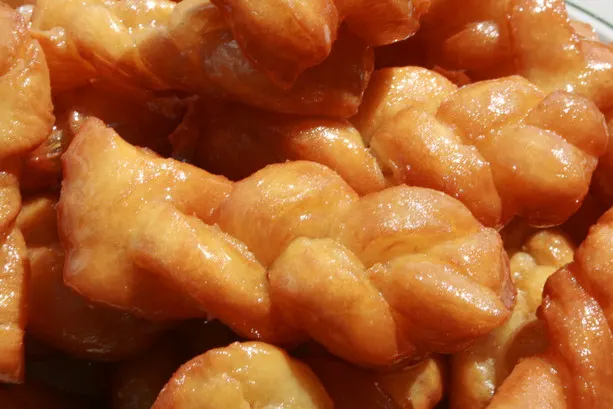
Plaited strips of dough, deep-fried and plunged straight into ice-cold spiced syrup. Crisp outside, dripping inside — the temperature difference is the whole recipe.
Koeksisters are Afrikaans baking and should not be confused with the Cape Malay koesister, which is round, spiced and rolled in coconut. The name probably comes from the Dutch koekje plus sissen — the sound made when they hit the syrup.
- Prep
- 1 hr 15 min
- On the fire
- 25 min
- Serves
- 12
- Effort
- demanding
When it goes on
Right at the end
Pudding in the last of the heat — or something that needs no fire at all.
Equipment: Cast-iron pan
This line
The three-legged pot, sausage as a way of keeping meat, bread without an oven.
Method
-
Make the syrup the day before
Boil sugar, water, spices, lemon peel and juice, cream of tartar and salt hard for ten minutes. Cool completely and refrigerate overnight. The syrup has to be ice cold — that is not advice, it is the condition.
-
Make the dough
Mix flour, baking powder, mixed spice and salt. Rub in the frozen butter with your fingertips to coarse crumbs. Add milk and buttermilk and knead to a smooth dough.
-
Rest it
Cover and rest for 30 minutes. The dough relaxes and can then be plaited without springing back.
-
Cut and plait
Roll out about five millimetres thick and cut into rectangles of 14 by 6 cm. Cut each lengthways into three strips, leaving one end joined. Plait and pinch the open end firmly.
-
Prepare the syrup
Split the cold syrup into two batches. One goes into the freezer just before frying, the other stays in the fridge — swap as soon as the first warms up.
-
Fry
Heat the oil to 180 °C. Fry only four or five plaits at a time, about two minutes, turning once, until golden brown.
-
Straight into the syrup
Out of the oil and into the ice-cold syrup, submerged for a minute. The shock draws the syrup inside while the crust stays crisp. Lift out with a slotted spoon and drain on a rack.
Tips
- Hot into cold is the entire craft. Warm syrup softens the crust; cold syrup gets drawn in — which is why a batch is always waiting in the freezer.
- Do not fry too many at once. If the oil temperature falls, the plaits soak up fat and turn heavy.
- They keep a week in a tin and three months in the freezer. Thawed, they are close to fresh.
- Koeksister and koesister are two different things. Order koeksisters in a Cape Malay shop and you get something else — round, spiced, rolled in coconut.
Koeksisters are the most technically demanding recipe on this site, and it hangs on a single physical fact: hot pastry draws in cold liquid.
When a plait at 180 degrees drops into ice-cold syrup, the air inside it contracts and creates a partial vacuum. The syrup is pulled inwards while the crust outside stays too cold to soften. The result is a crisp shell with liquid sugar inside it.
Lose either temperature and it fails. Warm syrup softens the crust; lukewarm oil lets the plait soak up fat. Hence half the syrup in the freezer — and hence only a small batch fried at a time.
Where it comes from
- Where the word comes from
- Afrikaans, from Dutch · Literally „probably from *koek* (cake) and *sissen* (to hiss)“ The hiss in hot fat is the likeliest explanation; it is not certain either.
There are two pastries with almost the same name, and confusing them is the commonest mistake on the subject. The Afrikaans koeksister is a plaited yeast or baking-powder dough, deep-fried and dropped straight into ice-cold syrup; it is glassy, hard outside and drips. The Cape Malay koesister is round, spiced with cardamom, cinnamon and anise, rolled in coconut after its syrup bath, and soft.
Both come from the same period and the same place — the Cape of the eighteenth and nineteenth centuries — but from different households. The koesister belongs to Sunday morning in the Bo-Kaap, the koeksister to the Afrikaans coffee table.
For the koeksister the temperature difference is not a detail but the technique. The syrup has to come out of the fridge, the pastry straight out of the fat. If the syrup soaks in slowly the dough goes soggy; properly cold, a thin sugar crust forms outside and the inside stays dry. That contrast is the whole point.
Neither belongs at the fire. They are here because they belong to a South African afternoon — after the braai, with the coffee.
Sources for this section
Watch this
Linked, not embedded — opening this page contacts no outside server. The time marks jump straight to the moment.
25:17
English
Salwaa Smith | Cape Malay Cooking & Other Delights
How To Make Koesisters Part 1
From a cook who comes out of this kitchen. For the difference between koeksister and koesister it is the best source on video.
- 2:10„Making the dough“ — The dough of the Cape Malay koesister — spiced, yeasted, and therefore a different pastry from the Afrikaans koeksister.
- 10:30„Making the balls“ — Rolled round rather than plaited. That is the most visible difference between the two pastries.
- 14:08„Frying“ — Fat temperature and colour — where homemade ones usually go wrong.
Differs from us
Our recipe is the Afrikaans koeksister: plaited, unspiced, in cold syrup. The video shows the other one — and makes clear that two different things share almost one name.Last checked 2026-09-05
Goes with this
Sweet
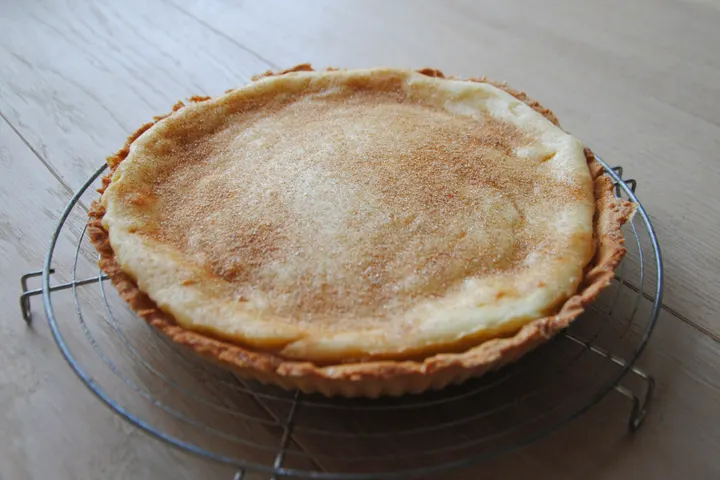
Melktert
Sweet · Malvapoeding
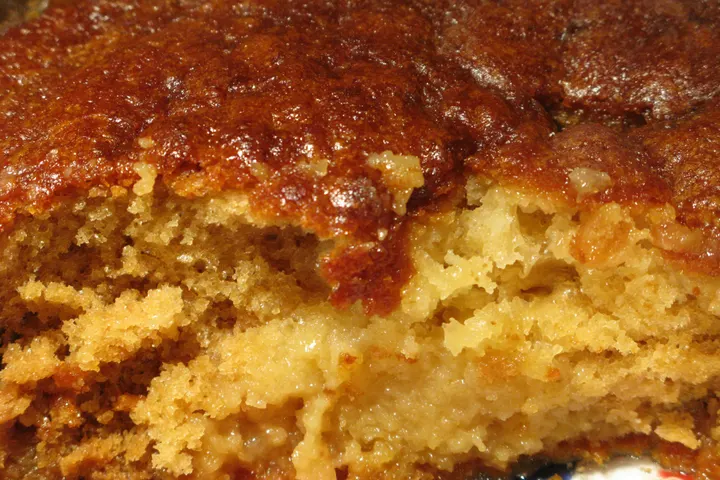
Malva pudding
Sweet
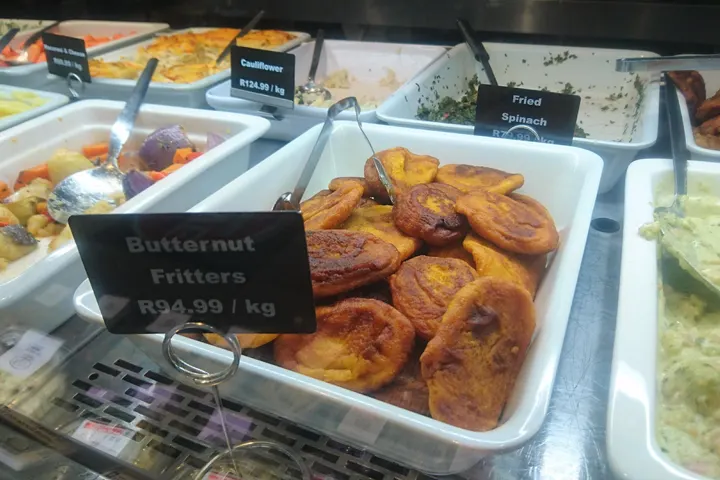
Pampoenkoekies
Snack
Braaipastei
Medium
Snack · Braaipastei