Meat
Gatsby
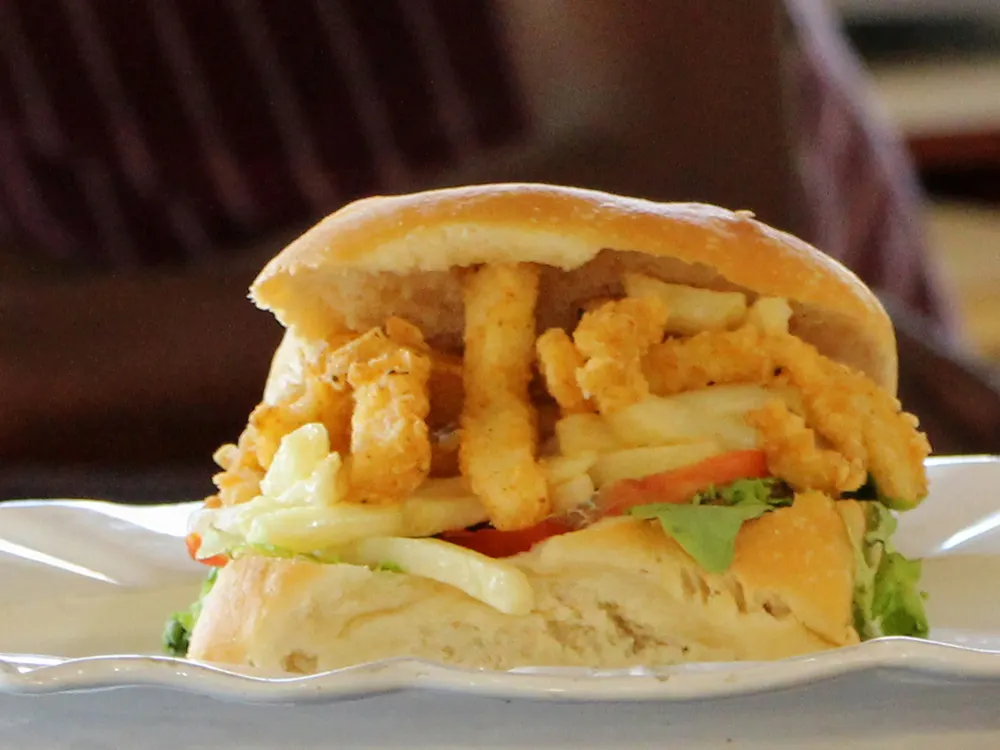
A whole baguette packed with vinegar-soaked chips, meat and hot sauce, cut into six. Not a sandwich for one — a meal for half the street.
The Gatsby was invented in Athlone on the Cape Flats in 1976. Rashaad Pandy ran a fish-and-chips shop and had to feed the workmen refitting it. He filled a loaf with slap chips, polony and achaar and cut it into pieces. One of the labourers had just seen The Great Gatsby at the Athlone Theatre and called out "this is a Gatsby smash". The name stuck.
- Prep
- 25 min
- On the fire
- 30 min
- Serves
- 6
- Effort
- easy
When it goes on
Done beforehand
Made in the kitchen. On the table before you light up.
Equipment: Cast-iron pan
This line
Spices, the sweet-sour handling of meat, marinades, the skewer.
Method
-
Mix the sauce
Stir everything together and leave it. It should stay runny — it has to pour over the chips later.
-
Fry the chips
Heat the oil to 170 °C. Fry the dried chips in batches for fifteen to twenty minutes until golden and soft inside. Drain on kitchen paper.
-
Sear the meat
Sear the steak strips hard and fast in a hot pan, two minutes at most. They carry on cooking inside the bread.
-
Throw the chips into the sauce
Tip the chips into a large bowl and pour the sauce over. Toss once so every chip gets some. That is what makes it a Gatsby — not chips on the side, chips in the sauce.
-
Fill the loaf
Split the baguette lengthways without cutting through. Load the bottom half generously with chips, add the meat, more sauce, then the rest of the chips.
-
Lettuce and tomato on top
Lay on the lettuce and tomato slices, close it and press down firmly.
-
Cut into six
Cut across into six portions with a big knife. A Gatsby gets shared — that is not a suggestion, it is the definition.
Tips
- The bread has to be soft. A crusty baguette cracks when you press it and the filling escapes.
- The classic Cape Town filling is polony, not steak: one minute in the pan is all it needs.
- For less heat, leave out the peri-peri and use more sweet chilli. The heat comes from the sauce, not the meat.
- It does not go with a braai — it replaces one. A Gatsby is Friday night, not an afternoon at the fire.
The Gatsby is Cape Town's own fast food, and it did not come out of a restaurant but out of a corner: in 1976 Rashaad Pandy in Athlone needed something quick that would fill several builders. He used what was in the shop.
What came of it is now sold by every takeaway on the Cape Flats, usually in four fillings: polony, masala steak, chicken, calamari. You order by size — a whole Gatsby, a half, a quarter.
Why it is on this site: because South African food does not stop at the fire. And because it is the one thing here that needs a table several people can reach across at once.
Where it comes from
- Where the word comes from
- South African English · Literally „after the novel“ An accidental name with no connection to the book — it simply stuck.
The gatsby is one of the few South African dishes whose making can be pinned to a year and a place: 1976, Athlone on the Cape Flats. A shop owner had to feed the workmen rebuilding his place and had only a long roll, chips and leftovers. He filled the one with the other, and it became a sandwich four people share.
The place is not incidental. The Cape Flats is where the apartheid government moved people forced out of inner-city neighbourhoods. What was invented there in the way of food was invented under conditions you have to read along with it: a lot for very little, out of whatever was there.
The ingredient that makes a gatsby is the chips inside the bread, not beside it. They take up sauce, go soft and bind the filling — leave them out or serve them alongside and you have made a different sandwich.
It turns up at a fire because the filling usually comes off the grid: steak, wors, chicken. The loaf is cut open, filled, closed again and cut into lengths — and then a board goes on the table instead of four plates.
Sources for this section
Goes with this
Sauce
Monkey Gland Sauce
Done beforehand
Sauce · Monkey Gland Sauce
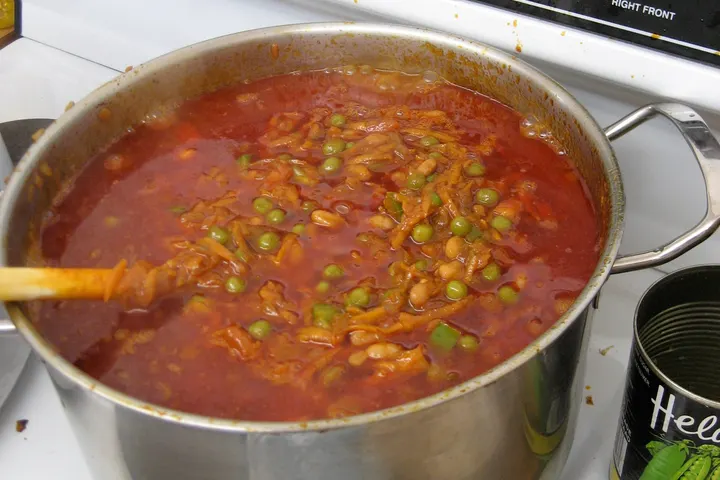
Monkey gland sauce
Fish · Calamari op die kole
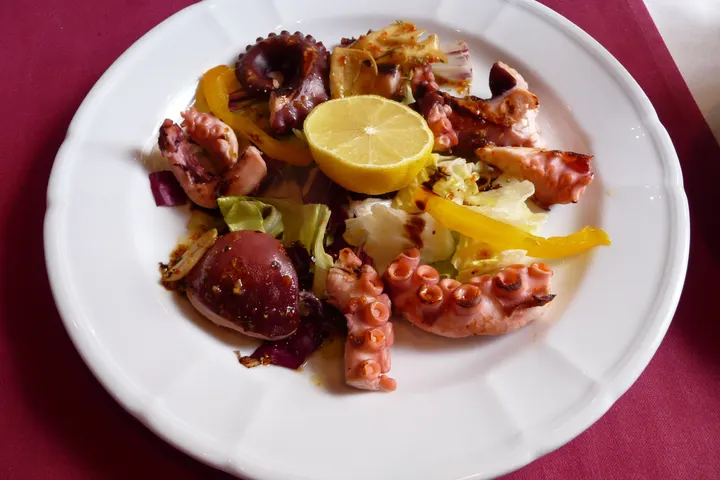
Calamari off the grid
Meat · Murgbene