Bread
Potbrood
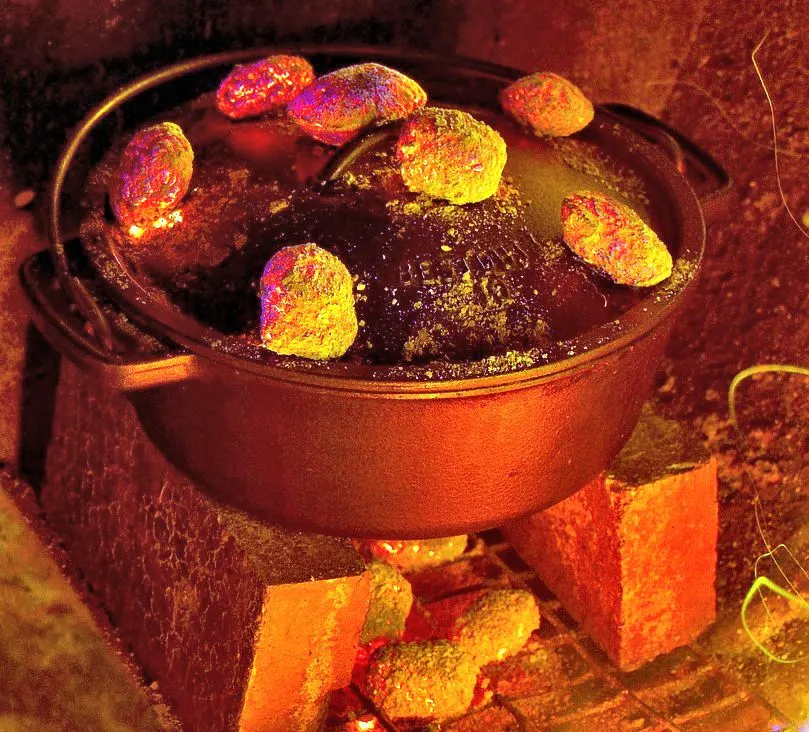
Yeast bread baked in a cast-iron pot straight in the coals — coals underneath, coals on the lid. Cracking crust, soft crumb, no oven involved.
Potbrood is trek cooking. The Voortrekkers had no oven with them but they had a cast-iron pot with a lid, and a mound of coals. It is still done exactly that way, minus the pit.
- Prep
- 35 min
- On the fire
- 35 min
- Serves
- 8
- Effort
- medium
When it goes on
Once the meat is off
The coals are dropping off. Now bread and braaibroodjies go on.
Equipment: Potjie
This line
The three-legged pot, sausage as a way of keeping meat, bread without an oven.
Method
-
Mix the dough
Combine flour, yeast, salt and sugar. Add milk, melted butter and eggs and knead to a soft but not sticky dough — eight to ten minutes.
-
First rise
Cover and leave somewhere warm until doubled. Twenty to sixty minutes depending on the weather. That is the time in which the fire gets going.
-
Into the pot
Oil the inside of the cast-iron pot thinly. Knock the dough back, shape it into a ball and drop it in. The pot should be no more than half full — the bread rises again considerably as it bakes.
-
Second rise
Put the lid on and leave for another 20 minutes, near the fire but not yet in the coals.
-
Into the coals
Stand the pot on a bed of mild coals and shovel a thin layer of coals onto the lid. Little below, more above — that is the whole art. Too many coals under the pot burn the base before the middle cooks.
-
Bake
25 to 35 minutes. Look carefully after 20 and refresh the coals on the lid if they have gone grey. It is done when it sounds hollow on being tapped.
-
Turn out and rest
Turn out onto a rack and rest for 15 minutes. Potbrood cut too early is gluey inside — even with everyone standing around.
Tips
- This quantity fits a No. 3 potjie of just under eight litres. In a smaller pot, halve the recipe rather than compressing the dough.
- A flat stone, or three stones, under the pot keeps it off the hottest coals. Direct contact with the ground is the classic reason for a black base.
- Leftover potbrood becomes braaibroodjies the next day. It is dense enough not to fall apart in a hinged grid.
Potbrood is one of the few recipes where the pot matters more than the ingredients. A cast-iron three-legged pot has thick walls, holds heat evenly and can be fired from above and below — it is an oven you can carry.
The decisive point is how the coals are shared out: few underneath, more on top. Bread browns from above, and a pot standing on too much heat produces a black disc with raw dough above it.
How long it takes depends on the fire, not the clock. Which is why published times run from 15 minutes to an hour and a half. Trust the hollow sound, not the number.
Where it comes from
- Where the word comes from
- Afrikaans · Literally „pot bread“ The pot meant is the three-legged cast-iron one, not any pot.
Potbrood is the answer to a camp problem. Anyone heading into the interior by ox wagon from 1835 had no oven along, but did have a cast-iron pot with a lid and a fire. Together those make an oven: the pot stands in the coals, more coals go on the lid, and the heat comes from both sides.
That is still the method, and it explains the shape. A potbrood is round because the pot is round, and it has a thick, dark crust because cast iron stores heat and gives it back. Inside it stays soft — the ratio of crust to crumb is different from any oven loaf.
The dough is deliberately plain: flour, yeast or baking powder, water, salt, a little fat. None of it had to be fresh and all of it travelled. Use milk and butter today and you make a better bread and a less historical one.
At a braai the real problem is timing. The bread takes about as long as a potjie and considerably longer than the meat. To have it ready for the meal you start earlier — or you make roosterkoek.
Sources for this section
Watch this
Linked, not embedded — opening this page contacts no outside server. The time marks jump straight to the moment.
33:03
English
Travel Trails Tastes
The BEST Snoek Braai Recipe | I Also Tried Snoek Roe for the First Time
Starts at the fishmonger rather than the recipe — and so shows the part that is hardest to replace outside South Africa.
- 2:19„Making the Pot Bread“ — Potbrood and fish on the same fire — which is how both reach the table at once.
- 22:10„Snoek on the Braai - The Final Reveal“ — The butterflied fish in a hinged grid, cooked from the skin side.
Last checked 2026-09-05
After recipes by
Goes with this
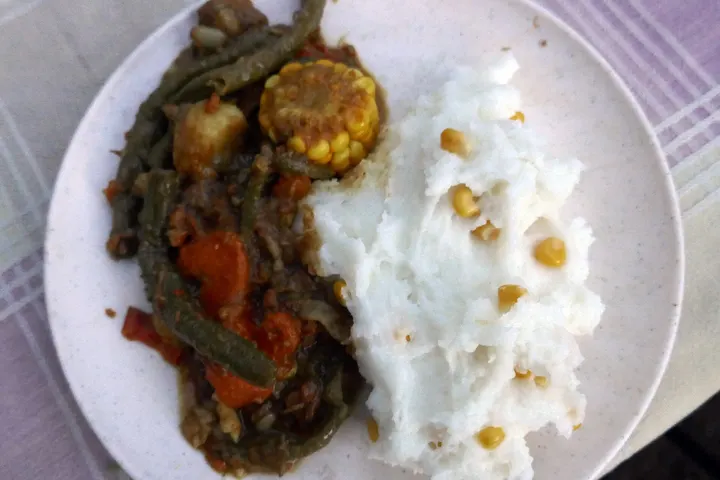
Meat · Lamspotjie
Lamb potjiekos
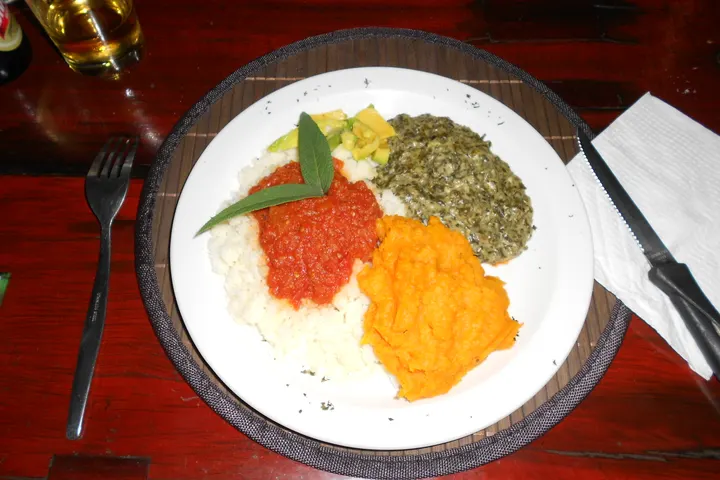
Sauce
Sheba
Snack