What can be shown comes from two kinds of source. One is the travel record: early visitors describe Khoikhoi herders with large hand-built clay cooking vessels in which meat was boiled, and groups using flat-bottomed cooking bowls for meat, bones, soups and seed mush.
The other is laboratory work. A study of Later Stone Age pots from Namaqualand found residues of milk, meat and marine resources — fatty acid profiles, not a story. That is the ground this line stands on: there was fire here, there were pots, and there was the intention to make meat last.
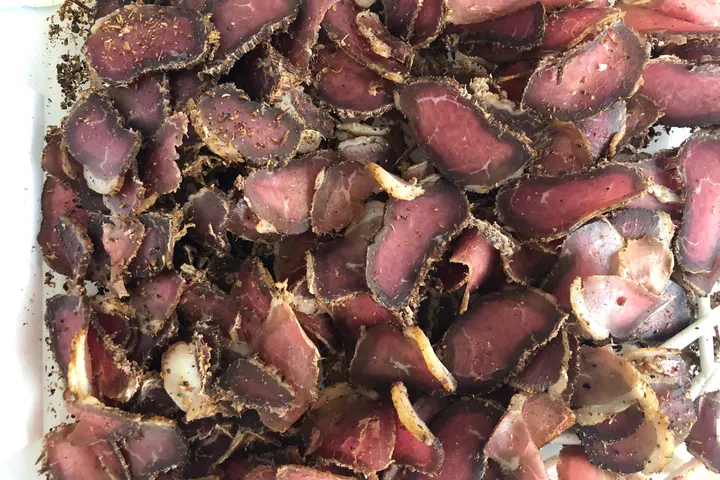
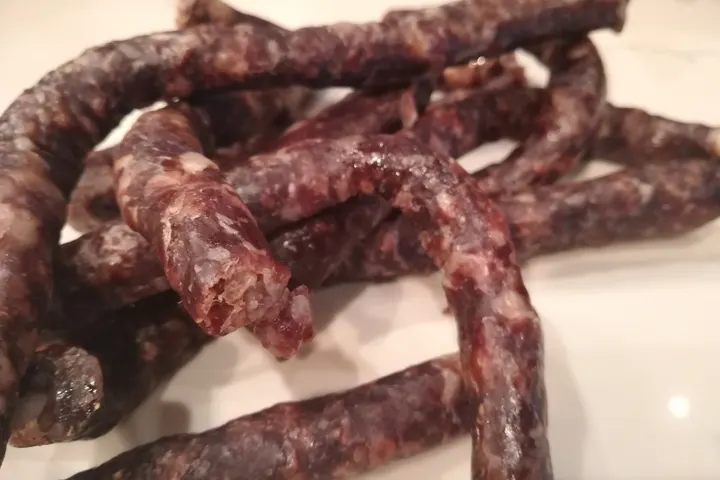
For the grid today that has one direct consequence. Biltong is often told as a Voortrekker invention; the accounts trace it back to the older practice of cutting meat into strips, salting it and hanging it in the air. What the settlers added was vinegar — and with it an acidity that leaves bacteria nowhere to go.